Retail
The Last Analog Frontier: Why Shelf Visibility Is Retail's Biggest Blind Spot
Retail has digitized almost everything, except the shelf. Discover why closing the retail execution gap is becoming one of the industry's biggest competitive advantages
Reading Time
0 Minutes
Table of Contents
Expand
Authored By

Lukasz Piotrowski
CEO & Founder
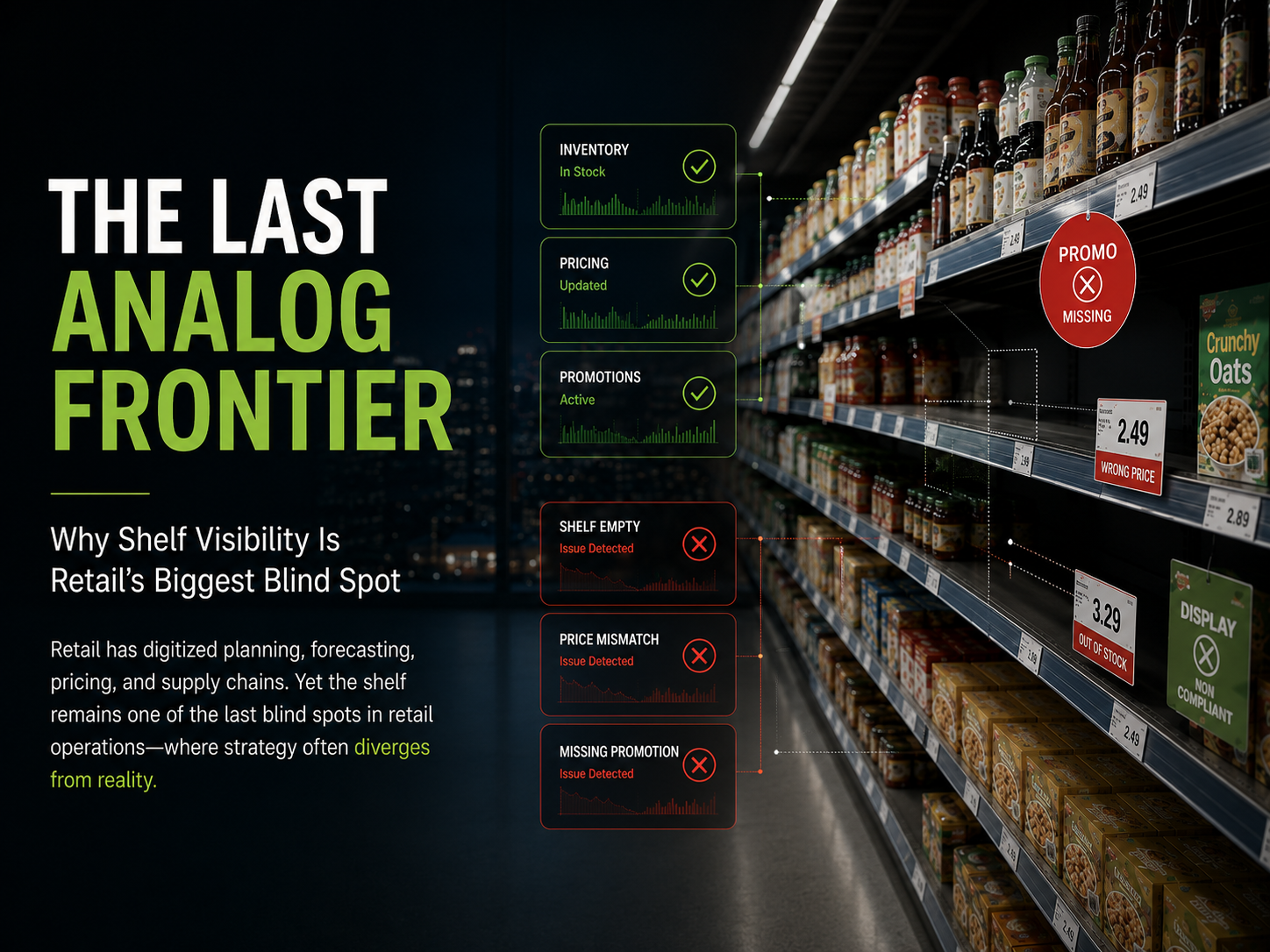
Right now, somewhere in a retail HQ, a dashboard shows a product as "in stock." The number is precise, timestamped, confident.
At the exact same moment, a shopper is standing in front of that product's spot on the shelf. It's empty. They wait a second, maybe check the shelf next to it, then walk away and buy something else, or nothing at all. Nobody logs it. Nobody at HQ ever finds out.
Two versions of the same reality, happening at the same time, and only one of them is true. OmniShelf calls that gap the Execution Gap. It's the difference between what the system says and what's actually on the shelf. Retail has spent a decade going digital everywhere else. This blind spot remains one of the industry's most expensive.
Retail digitized almost everything. Except the shelf.
Over the past ten years, retail went digital almost everywhere. Forecasting. Pricing. Supply chains. Inventory planning. It all changed. McKinsey studied AI in European retail. The results back this up. Retailers put AI into frontline work like buying and merchandising. Margins go up. Revenue goes up too. That's the kind of gain most retailers still can't get at the shelf.
But the shelf is different. It's the one place where that strategy meets a customer. It has barely moved. Store teams still lean on manual walks. They use paper checklists. They use spreadsheets. Those spreadsheets go stale the moment someone saves them. A planogram gets approved at HQ on Monday. It can look unrecognizable by Wednesday. Nobody finds out until the weekly report lands. Sometimes it never lands at all. Everything around the shelf has gone digital. The shelf itself is still retail's last analog frontier. Think of it like a map. Every other region now has power, roads, and real-time tracking. The shelf is the one stretch nobody's mapped yet. It still runs on manual checks and gut feel. Everything around it operates in real time.
Why Shelf Visibility matters more than ever
Shelf Visibility means knowing what's happening on a physical shelf, all the time, not just at a scheduled check. That question has become one of retail's biggest strategic priorities. IHL Group's research shows why this matters. The global cost of inventory distortion runs roughly $1.77 trillion in lost sales every year. That figure covers out-of-stocks, overstocks, and misplaced items combined. On top of that, more than half of retailers report inventory accuracy below 80%.
Weak shelf visibility drags down almost every execution metric that matters. It hurts On-Shelf Availability (OSA). A retailer can't fix what it can't see. It erodes Planogram Compliance. Layouts drift from the approved plan almost as soon as it's set. It damages pricing accuracy too. It hurts promotional execution. Add it all up. Shelf visibility becomes the single biggest lever inside Retail Execution. That's the umbrella term for how well a retailer's plans play out. Store by store. Day by day.
The Execution Gap, up close: Phantom Inventory
The clearest symptom of the Execution Gap is Phantom Inventory. That's when a system shows a product as in stock, but it isn't on the shelf. OmniShelf's own research into shelf execution found something stark. Roughly a quarter of out-of-stock events happen even though the product sits in the store. It's in the backroom, or on the wrong shelf, out of the shopper's sight.
A customer reaches for the spot where it should be, finds nothing, and rarely complains. They buy something else, or leave. Meanwhile, the inventory system doesn't know any of this happened. It keeps reordering as if everything's fine.
Why the old playbook doesn't scale anymore
None of this is a people problem. Store teams work hard, often on understaffed shifts. The real issue is different. Periodic store walks and paper checklists suited a slower retail era. Back then, assortments were narrower and promotions came less often. Nobody designed these tools for today's pace. Assortments turn over fast now. Customers expect the in-store experience to match what they saw online an hour earlier.
Retailers run a fast-moving, high-variability environment. But they use tools built for a slow, periodic one. That mismatch is why the Execution Gap keeps widening. Retailers spend more on technology everywhere else. Yet this gap remains. (We've written before about why planogram compliance breaks down once a layout goes live. It's a good illustration of how retail execution fails in practice.)
From periodic checks to continuous Shelf Intelligence
The industry's response is a genuine shift. It's about how retailers manage execution, not just a new tool category. Retail is finally settling that last unmapped territory. It's no longer sending in occasional scouts. IHL Group's own research backs this up. Retailers deploying AI and machine learning to close this gap see real results. Their sales growth runs 2.3 times higher. Profit growth runs 2.5 times higher than competitors still relying on the old playbook. Shelf and inventory visibility now sits among retail's top technology priorities.
The direction is clear: continuous, real-time Shelf Intelligence. This is the technology and process that delivers Shelf Visibility as an ongoing state, not a once-a-week snapshot.
Proof from the Field: 4,500 Stores, One Result
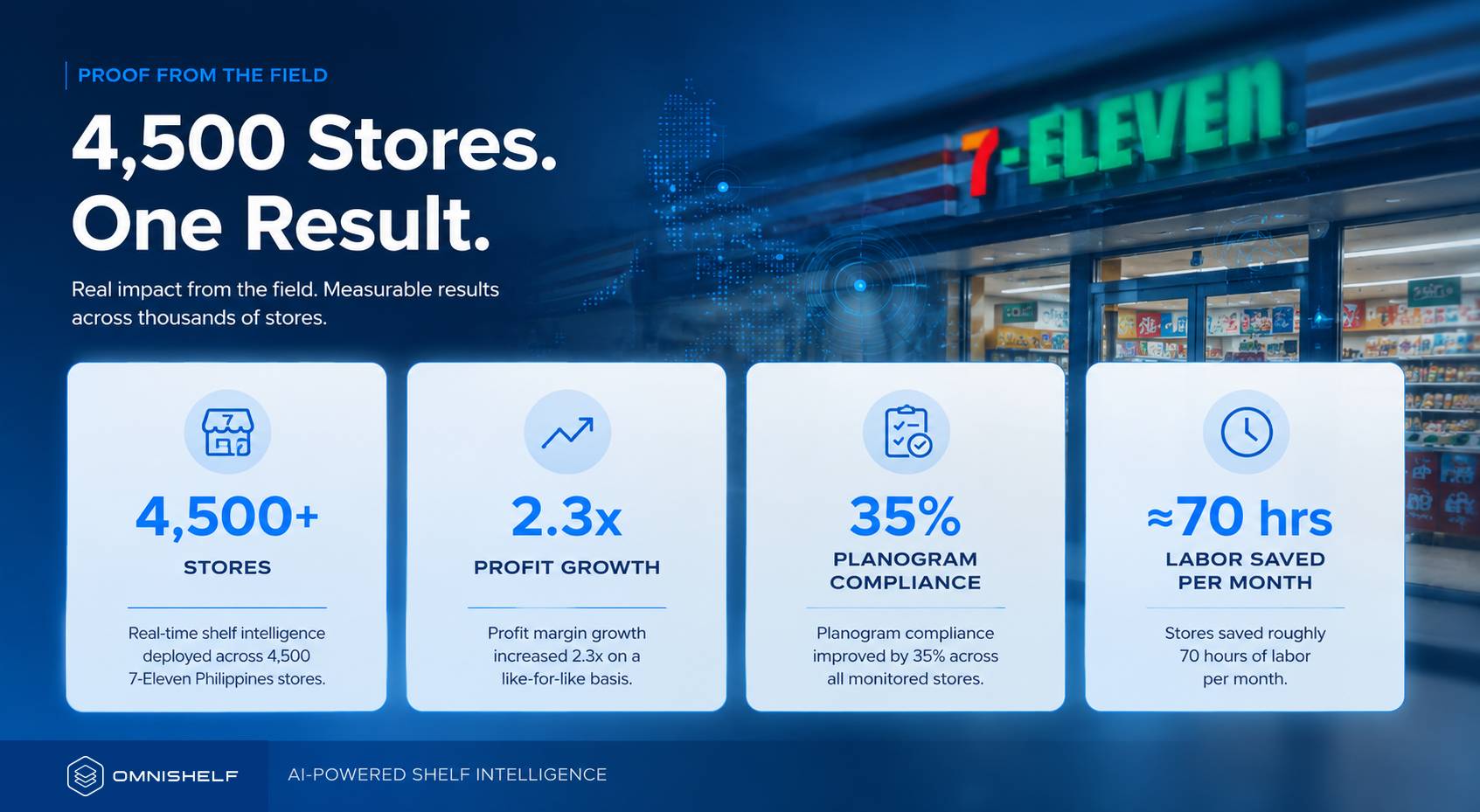
We've watched this shift play out first-hand. OmniShelf rolled out real-time shelf intelligence across 4,500 7-Eleven Philippines stores. The results were significant. Profit margin growth increased 2.3x on a like-for-like basis. Planogram compliance improved by 35%. Stores saved roughly 70 hours of labor per month.
Numbers like that confirm something we've seen across markets: the fix isn't collecting more data. Retailers already have plenty of that. The real fix is speed. Someone needs to catch and correct a shelf gap in minutes, not days. And it needs to happen without adding new work for people already stretched thin on the floor. (For more on this, see our earlier look at how applied AI supports store teams at every level, from the floor to headquarters. We've also written about why the future of computer vision is moving to the edge.)
Closing the last analog frontier
The shelf has stayed retail's last analog frontier for so long that most organizations built around it instead of fixing it. They added buffer stock. They over-ordered. They leaned on manual workarounds. That era is ending. The retailers pulling ahead treat shelf visibility as core infrastructure. It's not just a back-office reporting task.
The Execution Gap sits between headquarters and the store floor. Closing it is becoming a lasting competitive advantage. It touches sales, cost, and customer trust all at once. Retailers who close it aren't just improving a Retail Execution scorecard. They're closing the gap between what they think is happening in their stores and what customers actually see.
Book a demo with OmniShelf →
Sources
- McKinsey & Company (2026): Rewiring retail in Europe: The AI imperative. mckinsey.com
- IHL Group (2025): Retail Inventory Crisis Persists Despite $172 Billion in Improvements. ihlservices.com
- Fluent Commerce: Global State of the Industry: Inventory Data Accuracy. fluentcommerce.com
INSIGHTS & UPDATES
Explore More from the OmniShelf Blog
Stay ahead of the curve with deeper insights, product updates, and industry trends shaping the future of retail technology. Discover more stories that matter to your business.
The Last Analog Frontier: Why Shelf Visibility Is Retail's Biggest Blind Spot
Retail has digitized almost everything, except the shelf. Discover why closing the retail execution gap is becoming one of the industry's biggest competitive advantages
Read More
OmniShelf Named Digital Shelf Analytics Solution of the Year at the 2026 RetailTech Breakthrough Awards
OmniShelf Store Operating System has been named the 2026 Digital Shelf Analytics Solution of the Year by RetailTech Breakthrough, recognizing innovation in retail execution, shelf visibility, and store operations.
Read More

5 Reasons Planogram Compliance Fails in Retail Stores (And How to Fix It)
Planogram compliance often drops the moment a shelf is restocked. Discover why manual audits fail and how AI-powered computer vision turns "the last yard" into a competitive advantage.
Read More
What Actually Happens When You Put AI Inside an Engineering Team
AI coding tools are transforming software engineering, but not always for the better. Our CTO explores how AI is reshaping developer roles, creating new risks for junior engineers, and shifting the real bottleneck from writing code to thinking.
Read More
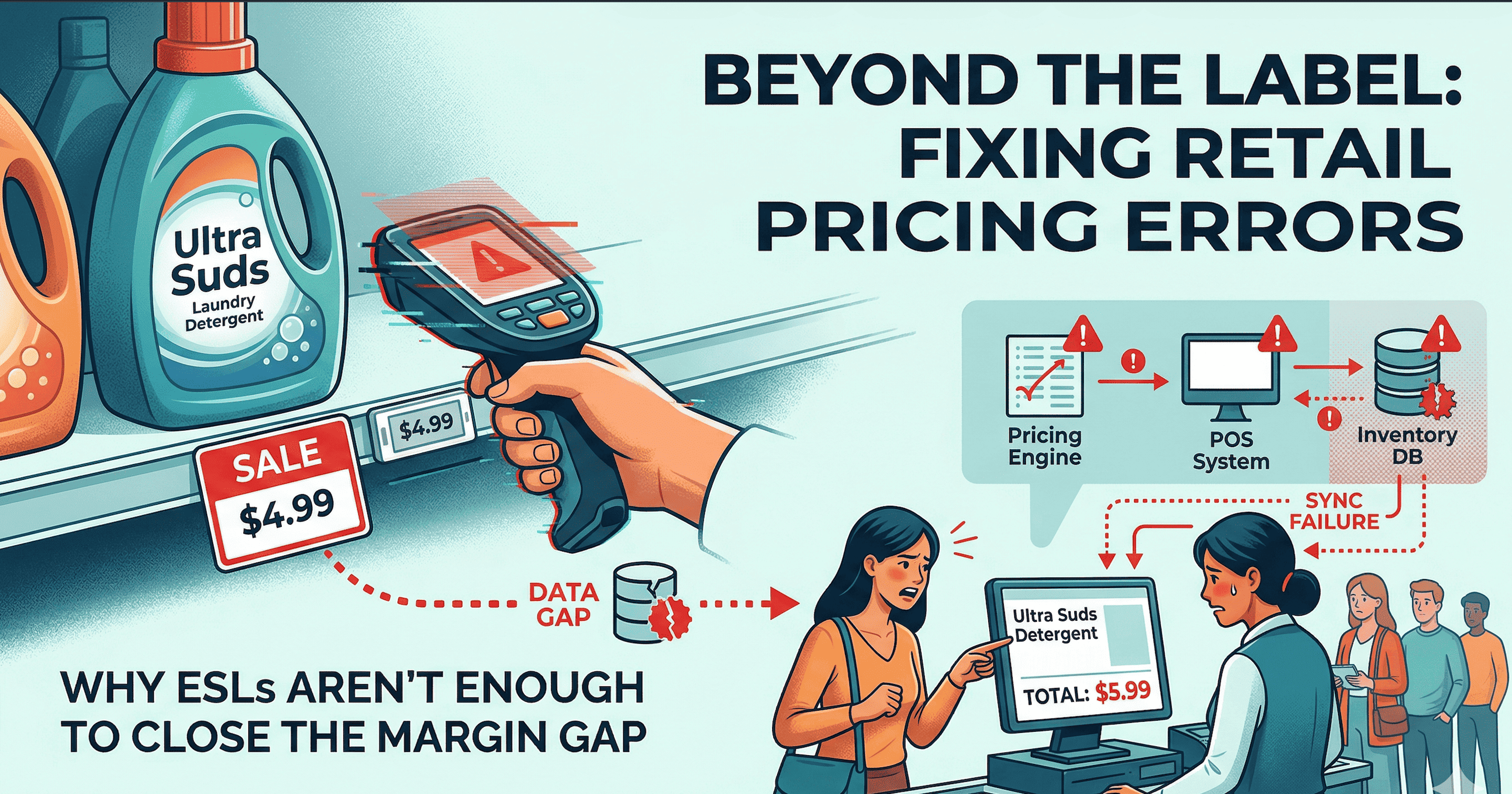
Why ESLs Are Not Enough To Close The Margin Gap
Retailers lose billions due to pricing errors even with electronic shelf labels. Discover why execution gaps persist and how to ensure accurate, real-time pricing across every store.
Read More
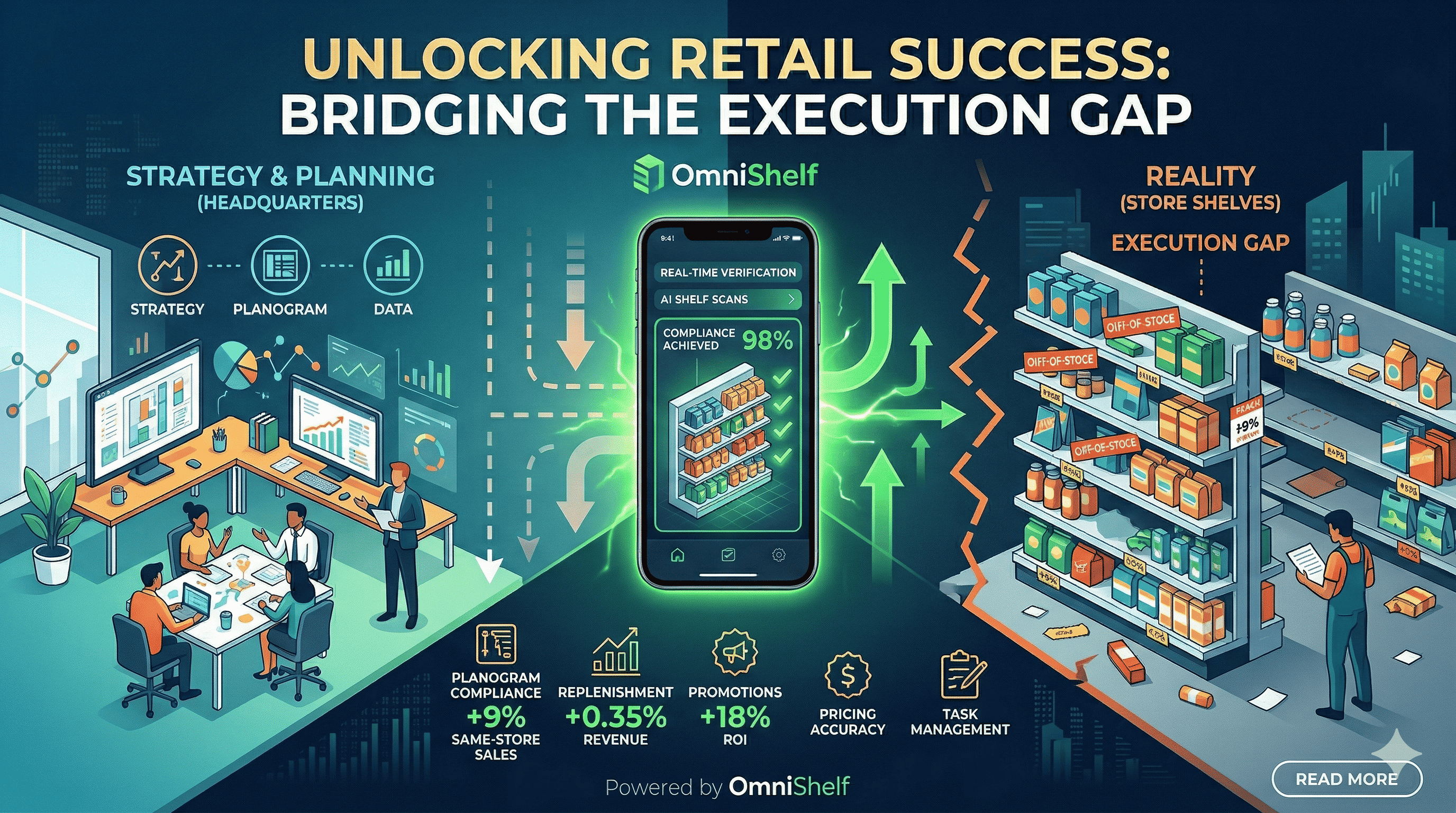
Why No Strategy Will Fix The Execution Failure
Effective retail execution is the critical link between leadership decisions and the actual customer experience at the store. Despite having sound strategies, many retailers suffer from revenue loss due to inconsistent store operations, such as incorrect shelf placement, inaccurate pricing, and failed promotions. Our CEO Lukasz Piotrowski talks about what makes the execution gap and how to fix it.
Read More
Why AI Agents Will Disrupt Retail Analytics
Reflections from our CTO why Ai agents will change how we look at retail analytics.
Read More

Building Deep Tech Engineering Teams When the Path Is Not Written Yet
In deep tech, linear progress is a myth and breakthroughs don't follow a schedule. This article explores the transition from scientific uncertainty to a scalable system, arguing that shared context and adaptability are the keys to solving impossible problems.
Read More
We are heading to EuroShop ( here’s what to expect)
Discover why OmniShelf is attending EuroShop 2026 to tackle real store execution challenges, improve shelf availability, and scale retail operations.
Read More
Lessons From a Decade in AI
Discover how scaling, data, generalisation, and hardware efficiency drive today’s AI systems, and why the future of AI is moving toward on-device performance.
Read More

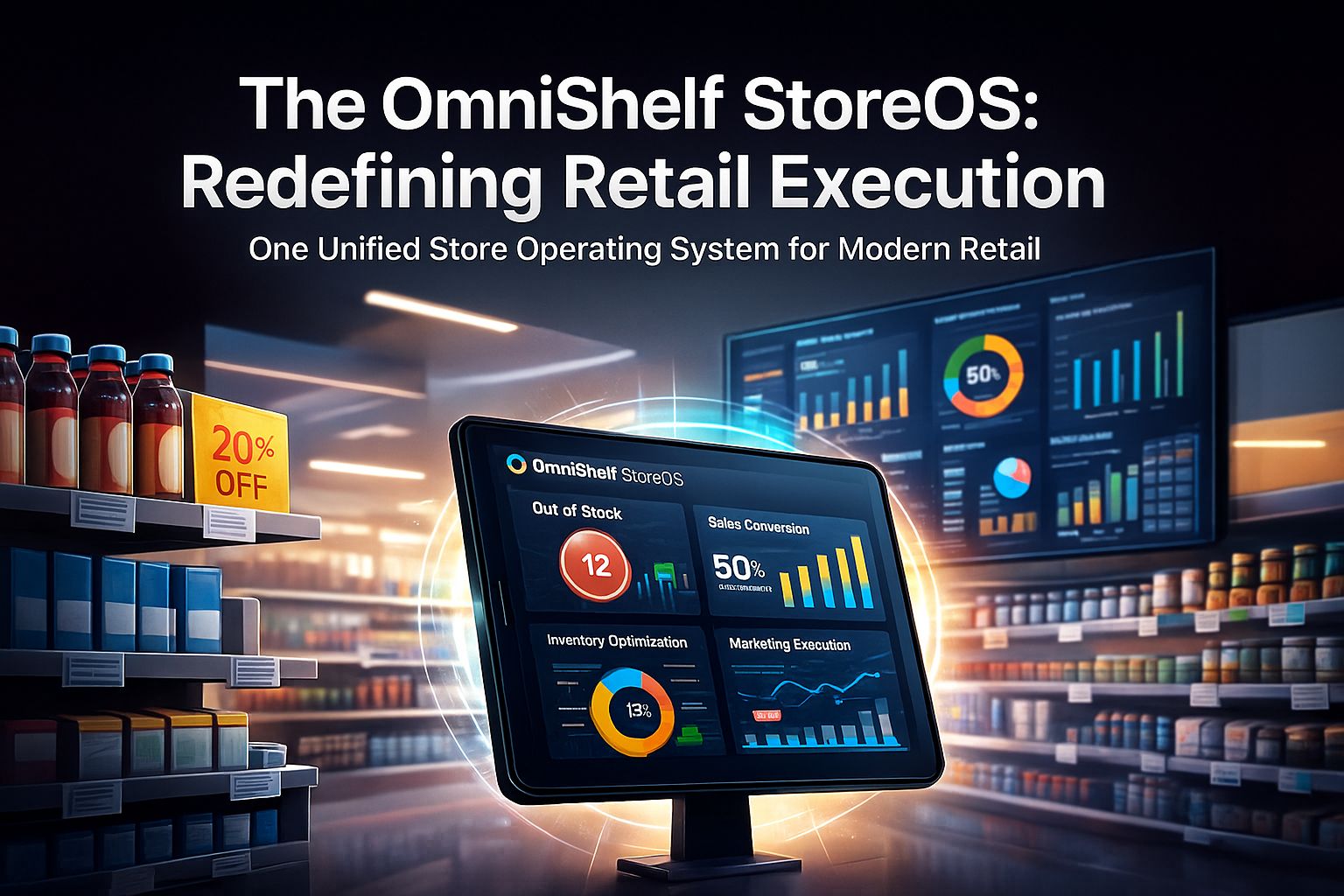
The OmniShelf Store Operating System: Redefining Retail Execution with Edge AI
Discover how the OmniShelf StoreOS unifies operations, marketing, inventory, and data to eliminate retail blind spots and improve execution across every store.
Read More
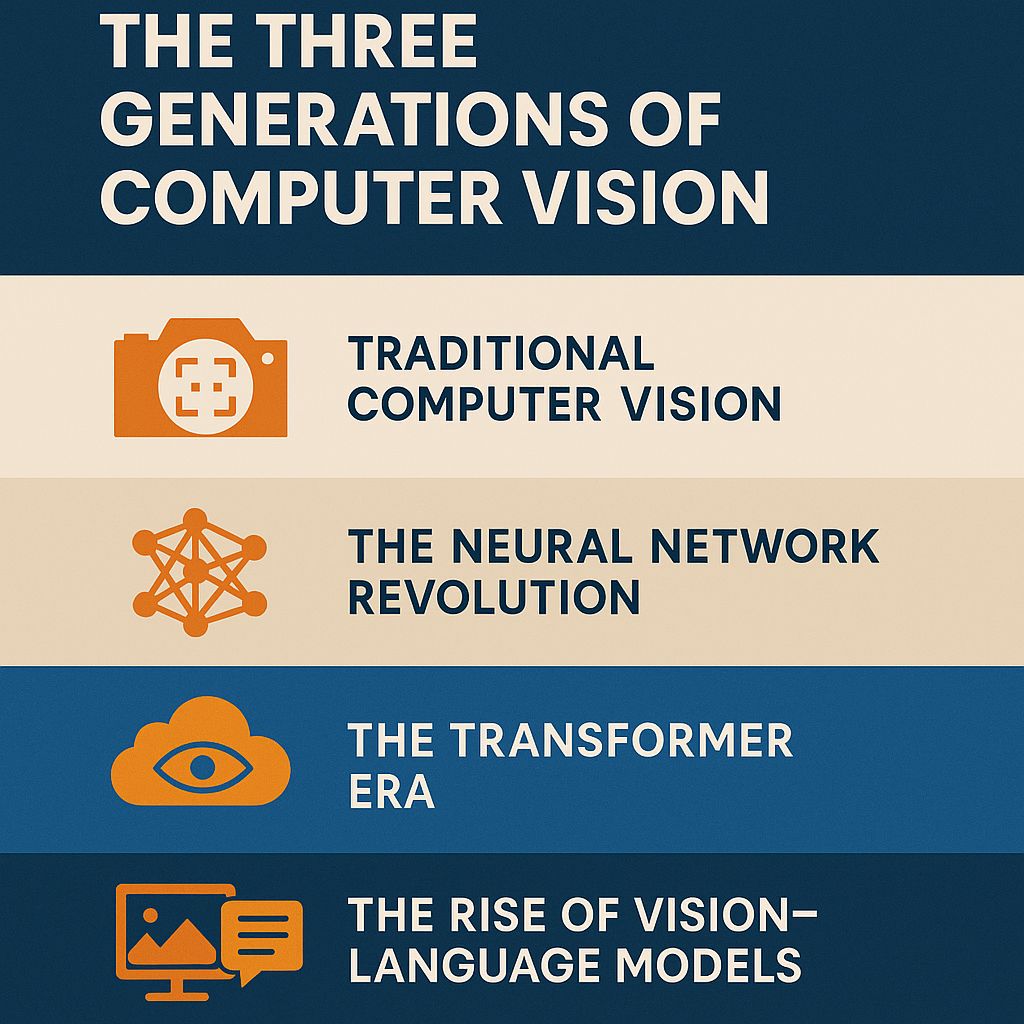
The Evolution of Computer Vision And Why the Future Belongs to the Edge
Discover how computer vision evolved from handcrafted algorithms to multimodal AI and why the future of visual intelligence is moving to the edge.
Read More
Elevate 2025 Highlights
OmniShelf joined forces with SOTI at monday.com Elevate 2025 to showcase how AI, automation, and real-time shelf visibility are transforming retail operations. Discover key highlights and insights from the event.
Read More
GS1 Hong Kong Retail Summit 2025 Highlights
From AI-powered supply chains to sustainable business transformation, here’s what industry leaders shared at the GS1 Hong Kong Retail Forum 2025 about building smarter, more resilient retail ecosystems
Read More

How Computer Vision is Revolutionizing Retail
Discover how AI-powered computer vision is revolutionizing retail operations. From preventing theft and managing inventory to enhancing customer experience, see how this technology, powered by edge computing, is reshaping the modern shopping experience.
Read More

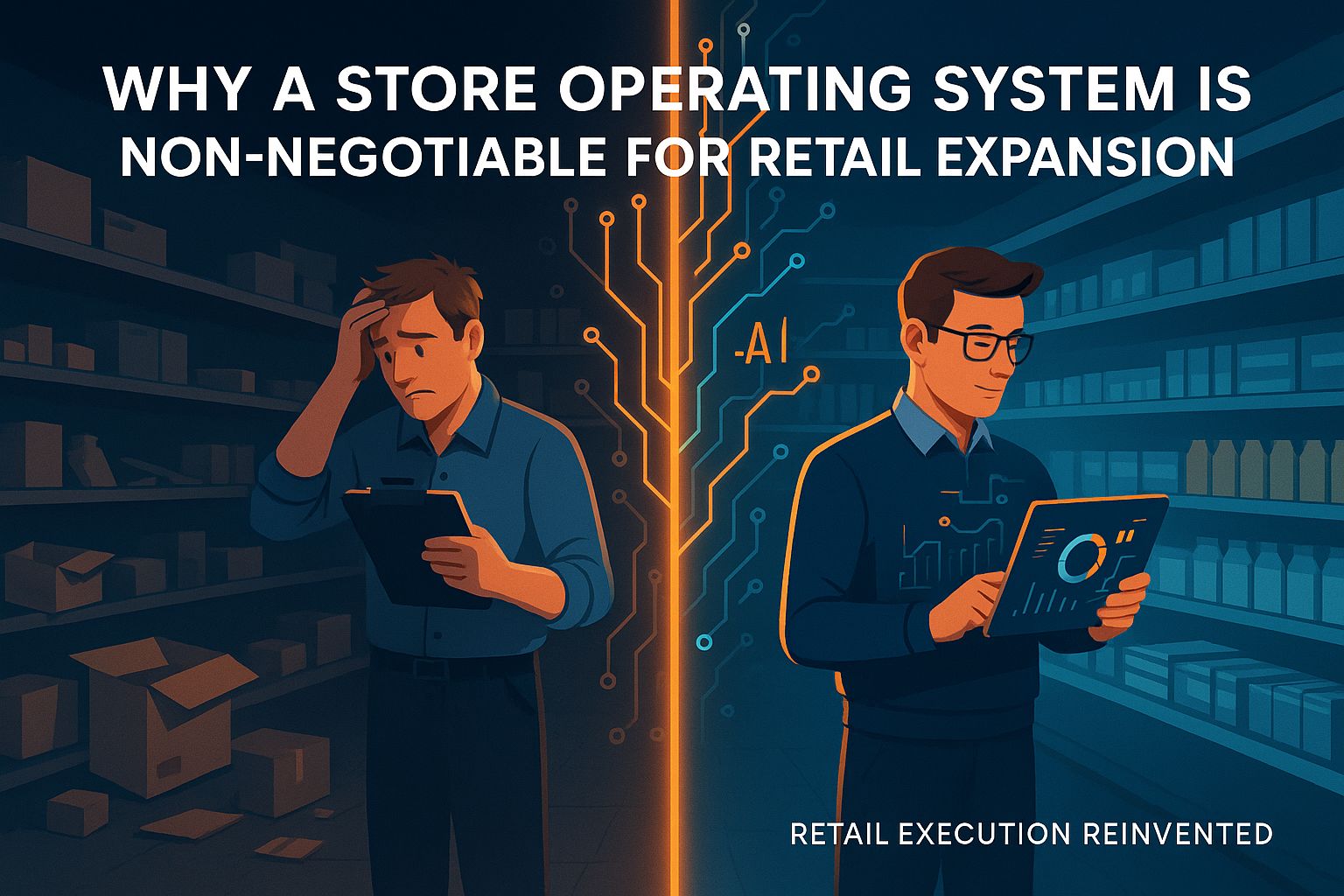
Why a Store Operating System is Non-Negotiable for Retail Expansion
Retail expansion brings complexity. Discover how a Store Operating System (SOS) transforms chaos into control with AI-powered execution, real-time insights, and unified operations.
Read More
Why Shoppers Walk Away
Learn why product availability is the foundation of customer experience. See how one “Out of Stock” sign can impact sales, loyalty, and reputation and how retail AI can stop it from happening.
Read More

The Imperfect Shelf Is Destroying Your Stores. Here’s Why.
Every misplaced product, wrong price tag, and empty shelf costs more than you think. Here’s why the imperfect shelf is retail’s hidden trillion-dollar problem.
Read More
NRF Paris 2025 Day 3 Recap: Unified Commerce & AI
Day 3 of NRF Paris 2025 highlighted unified commerce, AI-driven personalization, omnichannel innovation, and the future of customer experience in retail.
Read More
NRF Paris 2025 Day 2 Recap: Ai, data and customer centric strategies
Day 2 of NRF Paris 2025 showcased how retailers are using AI, data, and customer-centric strategies to transform payments, supply chains, loyalty, and in-store experiences. From community sponsorships with Snipes & PSG to MediaMarktSaturn’s omnichannel reinvention, the event highlighted the future of retail with personalization, automation, and next-gen customer engagement.
Read More

NRF Paris 2025 Day 1 Recap: AI, Payments & Omnichannel Innovation
Discover the highlights from Day 1 of NRF Paris 2025 – Retail’s Big Show Europe. From AI-powered retail operations and evolving payment solutions to omnichannel strategies and sustainability, here’s how leaders are shaping the future of retail.
Read More
We Are Attending NRF 2025: Retail’s Big Show Europe
Join OmniShelf at NRF Paris 2025, where innovation meets retail. Join us at Europe's premier event to explore cutting-edge solutions for the future of shopping.
Read More

Are Your Shelves Killing Your Sales?
Learn how poor shelf execution silently kills retail sales and how smarter real time solutions can improve revenue, trust and efficiency.
Read More

Why a Store Operating System is Non-Negotiable for Retail Expansion
Discover why spreadsheets and manual processes can cripple retail expansion. Learn how a Store Operating System (SOS) eliminates out-of-stocks, boosts shelf compliance, prevents staff burnout, and enables data-driven growth for modern retailers.
Read More

From Dock to Display: Closing the C-Store Execution Gap
The mission was clear. A major beverage brand spent millions to launch its new energy drink, meticulously planning every detail down to the cooler placement in thousands of convenience stores nationwide.
Read More

The Invisible Threat to Retail: How Phantom Inventory Haunts Southeast Asia
Discover how phantom inventory silently drains profits in Southeast Asia’s retail sector. Learn the causes, consequences, and strategic solutions to eliminate this invisible threat.
Read More
How AI Can Help You Manage the Store (At Every Level)
Learn how applied AI is transforming retail operations by reducing decision fatigue, preventing stockouts, and improving execution at the store, area manager, and headquarters levels with the OmniShelf Store Operating System.
Read More
The Trillion-Dollar Problem: How Poor Shelf Execution is Costing Retailers Billions
Poor shelf execution is costing retailers billions. This blog explores how out-of-stocks, pricing errors, and misplaced items sabotage sales and erode trust—even when products are in-store. Learn why traditional methods and outdated tech fall short, and how OmniShelf’s AI-powered, real-time shelf operating system helps prevent lost revenue, even without internet access.
Read More
What we learned at Shoptalk Europe 2025
Omnishelf joined retailers and tech leaders at Shoptalk Europe 2025 to explore what’s next for the retail shelf. Here’s our take on the trends that matter.
Read More

Live from Zebra DevCon 2025: Real Retail Problems, Real Solutions
OmniShelf is proud to be here on the ground. We’re showcasing how our real-time shelf intelligence tool helps store teams save time, improve shelf execution, and increase sales without needing extra hardware.
Read More

Meet Us at NRF Singapore 2025
Discover how OmniShelf and Zebra Technologies are transforming shelf management with real-time retail intelligence at NRF Singapore 2025. Visit us for live demos and expert insights.
Read More
