Tech
Building Deep Tech Engineering Teams When the Path Is Not Written Yet
In deep tech, linear progress is a myth and breakthroughs don't follow a schedule. This article explores the transition from scientific uncertainty to a scalable system, arguing that shared context and adaptability are the keys to solving impossible problems.
Reading Time
0 Minutes
Table of Contents
Expand
Authored By

Călin Ciobanu
Co-founder & CTO
When people look at OmniShelf today, they see a team, a product, a system that works.
What they do not see is the quiet moment years ago when I sat alone in front of a blank whiteboard, staring at a problem that had no known solution. No roadmap. No example to copy. No one to ask for help.
Deep tech begins with solitude.
It begins with uncertainty.
And this is the story of how that uncertainty slowly became a team.
Why Deep Tech Does Not Behave Like SaaS
I remember one afternoon testing an early prototype.
The algorithm refused to improve. We tried adjusting parameters, retraining models, changing data strategies. Nothing moved. Hours turned into days. For someone watching from outside, this might have looked like failure. For me, it was a familiar part of the process.
Most software teams would respond by adjusting a sprint, reallocating tasks or estimating the next release date. But deep tech does not listen to estimates. It does not move because you want it to. It moves when a scientific insight appears, and that insight refuses to follow a schedule.
You cannot set targets like
"Let us increase accuracy by two percent by next week."
Breakthroughs do not work like that.
In classical software, you count potatoes. You know the shape of the work, the pace of the team and the direction of the project.
In deep tech, there are no potatoes. The thing you are trying to build might not even be possible yet.
And yet you continue. That is the mindset that separates deep tech from everything else.
The Kind of Team You Need When the Map Does Not Exist
One morning, during an early stand-up, something struck me.
Everyone was reporting progress, but the puzzle pieces were drifting.
- The mobile engineer was making headway, but without understanding the constraints of the backend.
- The backend engineer was building features, but without visibility into machine learning latency.
- The machine learning researcher had ideas, but no sense of how they would affect the real-time experience of a store employee.
It was not incompetence. It was fragmentation.
We were fifteen specialists speaking fifteen different dialects.
And I realised something very important.
If deep tech is a landscape without a map, then someone has to see the whole terrain.
My own experience had taken me across embedded systems, infrastructure, mobile development, backend development, mathematics and machine learning. That breadth became the bridge that kept the team aligned. It allowed me to decompose problems and show each specialist how their part connected to the whole.
Deep tech does not reward large teams. It rewards teams with shared context.
A small group, senior and aligned, can do what a large team cannot. Because they build one solution, not fifteen partial ones.
What Problem Solving Actually Looks Like in Deep Tech
There is a moment that repeats itself often.
A new problem arises. The team waits for me to assign tasks. Instead, I walk to the whiteboard. I do not start with code. I start with silence.
I draw a shape. Then erase it.
I draw arrows. Then cross them out.
I stand still and imagine flows, constraints, failures that have not happened yet.
Only after that do we talk about experiments.
Some ideas are safe. We know they will move us a little forward.
Others are risky. They might collapse completely or unlock something we did not know was possible.
Choosing the right experiment is not luck. It is the slow build-up of intuition.
Intuition is not mystical. It is earned. It grows from failures that taught you more than success ever could.
Deep tech engineering contains mathematics and strategy, but also something softer.
- A rhythm.
- A feeling for when the idea is ready.
- A sense of when to chase the risky path because the safe one will trap you later.
That is the part no textbook explains.
First principal approach + simplicity = intelligence
There was a week when nothing worked.
Three approaches failed. Timelines stretched. Doubts crept in. Not from the team, but from the environment around us. People outside the engineering room often expect linear progress.
Inside deep tech, linearity does not exist.
In those weeks, leadership is not about giving orders. It is about absorbing uncertainty so the team can continue without fear.
There is no manual for how to lead when the answer does not exist. You learn from others who walked unknown paths.
- Steve Jobs.
- Gandhi.
- Elon Musk.
- Ilya Sutskever.
Unlikely names to appear together, but they have something in common. They moved through uncertainty with adaptability and mission-driven clarity. They accepted pain as part of progress. They understood that opening new paths always carries risk.
These stories mattered to me. They reminded me that leadership is not about certainty. It is about commitment. You keep moving, even while the ground forms under your feet.
When Things Finally Start to Take Shape
I can recall the first time I saw the entire system running end to end.
For years the product had existed as a constellation of components.
- Machine learning was here.
- Infrastructure was there.
- Mobile logic lived in a different corner.
- Backend had its own world.
But one day, the puzzle clicked.
Not perfectly, not fully polished, but recognisable. The shape was there. The system breathed.
That was the moment when we began documenting everything.
Not because documentation was overdue, but because the system finally stood still long enough to be described.
The unknowns were shrinking.
The architecture was emerging.
We were ready to shift from exploration into refinement.
This is the natural progression of deep tech.
- You explore.
- You discover.
- You stabilise.
- Then you scale.
But the order must never be reversed.
Why a Small Team Achieved What Larger Companies Could Not
Whenever people hear about our team size, they ask the same question.
How did fifteen engineers build something that corporations with hundreds of engineers could not?
The answer is simple.
- We learned faster than they could.
- We stayed close to the frontier of what was technically possible.
- We iterated without bureaucracy.
- We aligned deeply on the mission.
- We worked as one unit, not fragmented departments.
Innovation is not about headcount.
Innovation is about how quickly a team can absorb new information, adapt and execute.
A large team cannot match that speed unless every person shares context and moves together.
Few companies achieve this. Small deep tech teams often do.
A Final Reflection
Deep tech is not only engineering. It is a form of courage.
- The courage to begin without clear direction.
- The courage to persist when the path vanishes.
- The courage to lead people through ambiguity and protect them from its weight.
When I think back to that blank whiteboard at the beginning of OmniShelf, I realise the most important part of the journey is not that we built a breakthrough product. The most important part is that a small group of people chose to believe in a mission strong enough to keep going when nothing was certain.
In the end, deep tech is not about writing code.
It is about building the path that allows the code to exist.
INSIGHTS & UPDATES
Explore More from the OmniShelf Blog
Stay ahead of the curve with deeper insights, product updates, and industry trends shaping the future of retail technology. Discover more stories that matter to your business.
Phantom Inventory: More Than an Inventory Problem
Why phantom inventory keeps hurting retailers even after "fixing" the numbers, and the 3-step fix that stops bad data from spreading across teams.
Read More
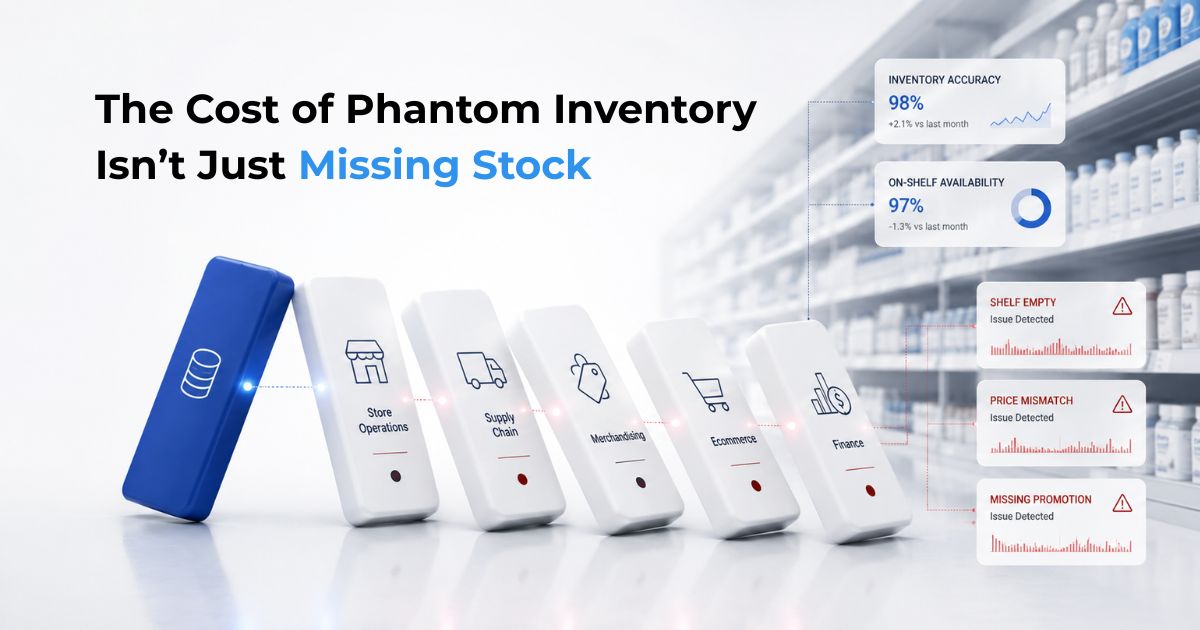
The Last Analog Frontier: Why Shelf Visibility Is Retail's Biggest Blind Spot
Retail has digitized almost everything, except the shelf. Discover why closing the retail execution gap is becoming one of the industry's biggest competitive advantages
Read More
OmniShelf Named Digital Shelf Analytics Solution of the Year at the 2026 RetailTech Breakthrough Awards
OmniShelf Store Operating System has been named the 2026 Digital Shelf Analytics Solution of the Year by RetailTech Breakthrough, recognizing innovation in retail execution, shelf visibility, and store operations.
Read More

5 Reasons Planogram Compliance Fails in Retail Stores (And How to Fix It)
Planogram compliance often drops the moment a shelf is restocked. Discover why manual audits fail and how AI-powered computer vision turns "the last yard" into a competitive advantage.
Read More
What Actually Happens When You Put AI Inside an Engineering Team
AI coding tools are transforming software engineering, but not always for the better. Our CTO explores how AI is reshaping developer roles, creating new risks for junior engineers, and shifting the real bottleneck from writing code to thinking.
Read More
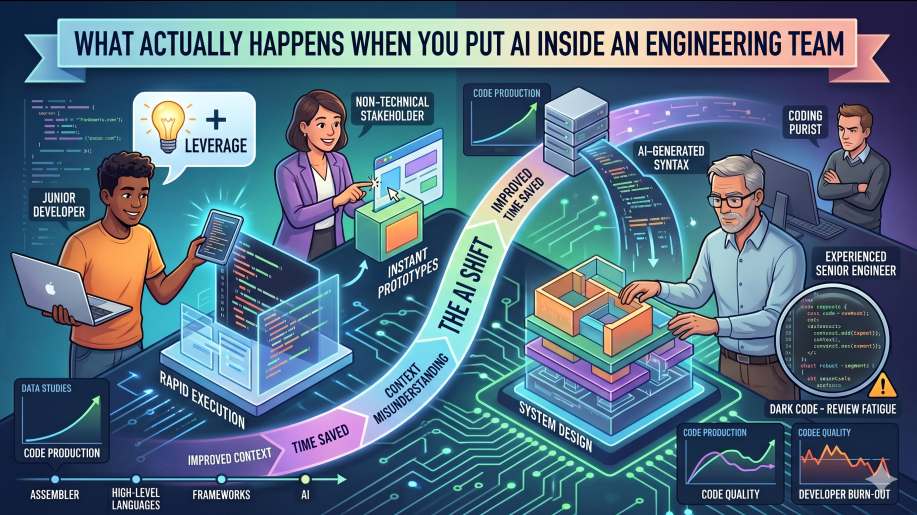
Why ESLs Are Not Enough To Close The Margin Gap
Retailers lose billions due to pricing errors even with electronic shelf labels. Discover why execution gaps persist and how to ensure accurate, real-time pricing across every store.
Read More
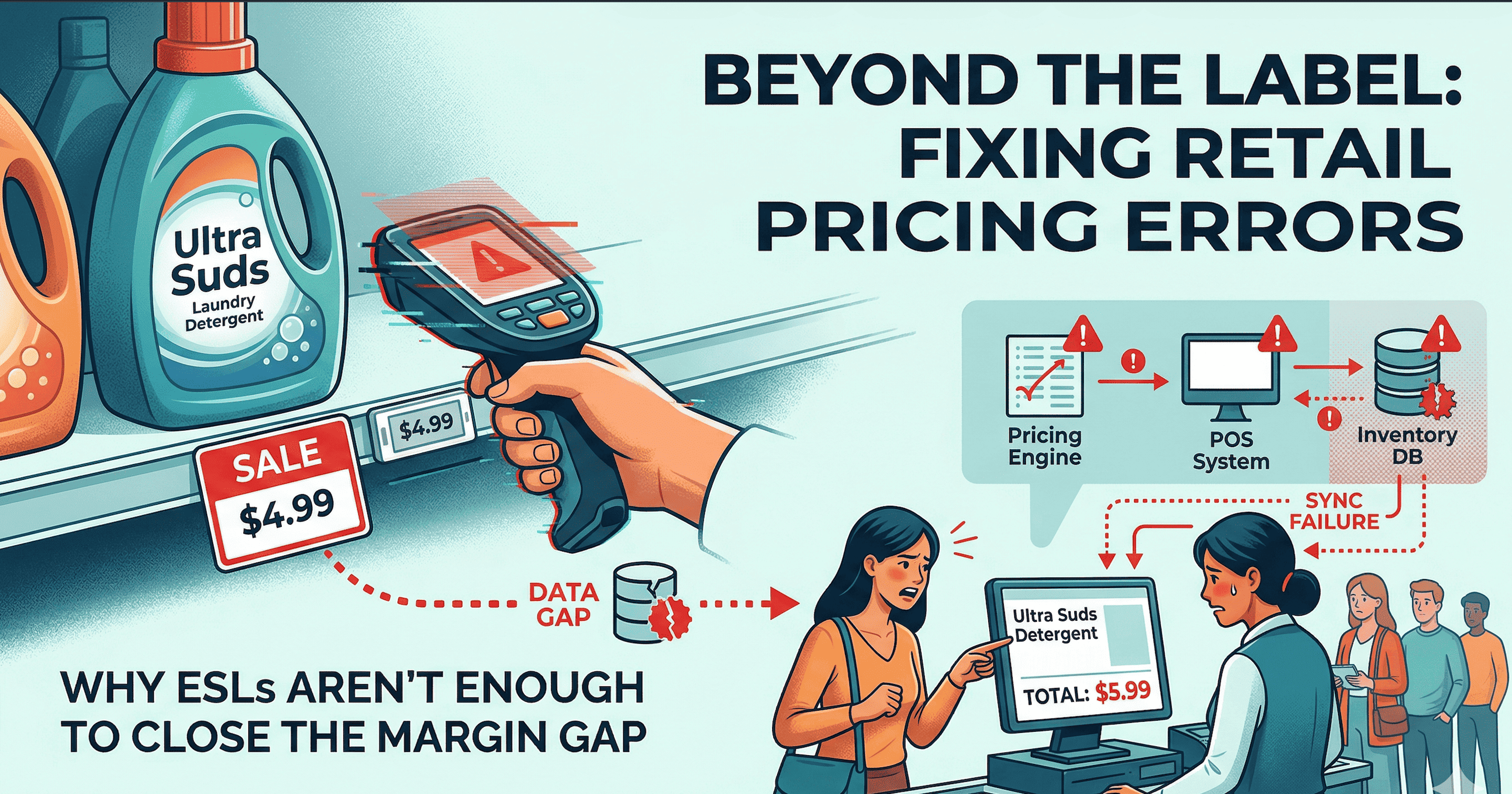
Why No Strategy Will Fix The Execution Failure
Effective retail execution is the critical link between leadership decisions and the actual customer experience at the store. Despite having sound strategies, many retailers suffer from revenue loss due to inconsistent store operations, such as incorrect shelf placement, inaccurate pricing, and failed promotions. Our CEO Lukasz Piotrowski talks about what makes the execution gap and how to fix it.
Read More
Why AI Agents Will Disrupt Retail Analytics
Reflections from our CTO why Ai agents will change how we look at retail analytics.
Read More

Building Deep Tech Engineering Teams When the Path Is Not Written Yet
In deep tech, linear progress is a myth and breakthroughs don't follow a schedule. This article explores the transition from scientific uncertainty to a scalable system, arguing that shared context and adaptability are the keys to solving impossible problems.
Read More
We are heading to EuroShop ( here’s what to expect)
Discover why OmniShelf is attending EuroShop 2026 to tackle real store execution challenges, improve shelf availability, and scale retail operations.
Read More
Lessons From a Decade in AI
Discover how scaling, data, generalisation, and hardware efficiency drive today’s AI systems, and why the future of AI is moving toward on-device performance.
Read More

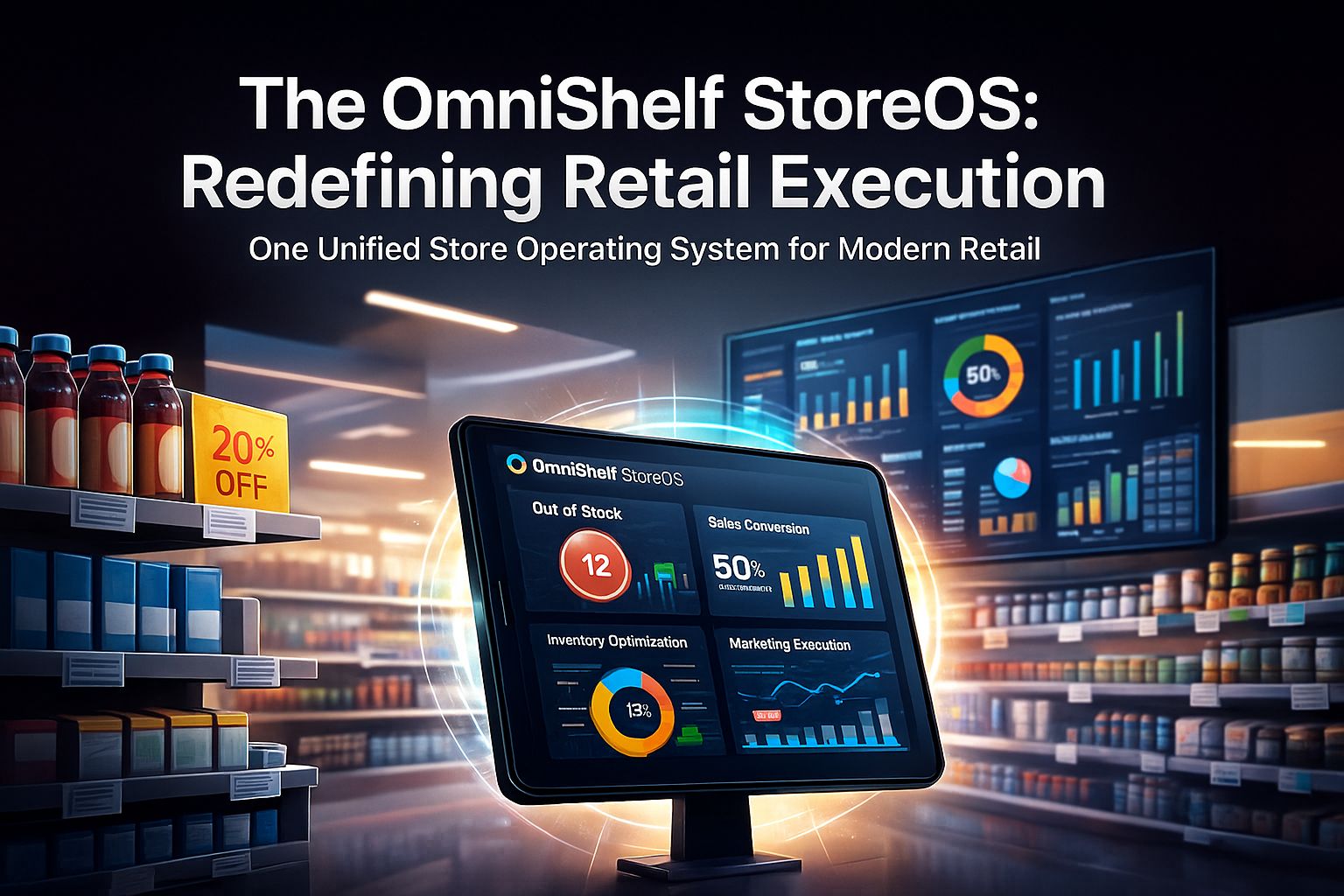
The OmniShelf Store Operating System: Redefining Retail Execution with Edge AI
Discover how the OmniShelf StoreOS unifies operations, marketing, inventory, and data to eliminate retail blind spots and improve execution across every store.
Read More
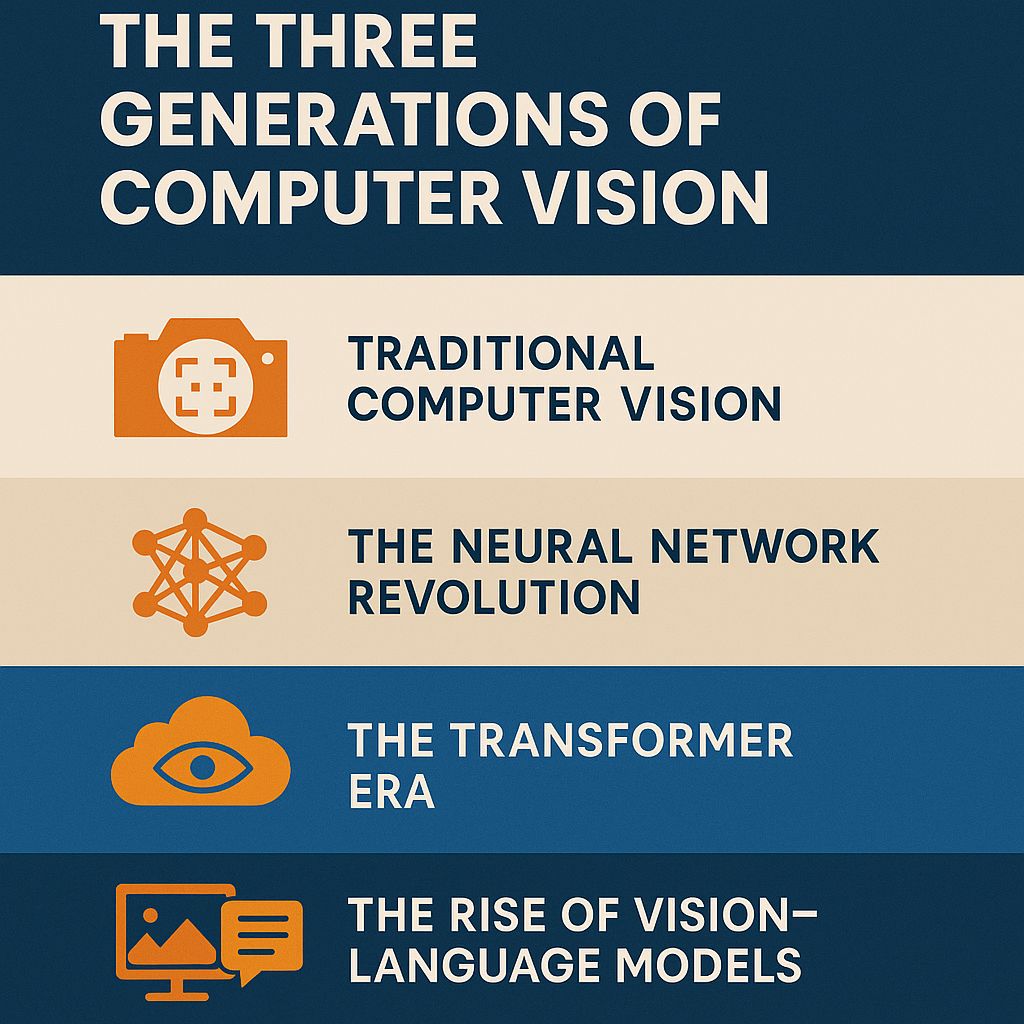
The Evolution of Computer Vision And Why the Future Belongs to the Edge
Discover how computer vision evolved from handcrafted algorithms to multimodal AI and why the future of visual intelligence is moving to the edge.
Read More
Elevate 2025 Highlights
OmniShelf joined forces with SOTI at monday.com Elevate 2025 to showcase how AI, automation, and real-time shelf visibility are transforming retail operations. Discover key highlights and insights from the event.
Read More
GS1 Hong Kong Retail Summit 2025 Highlights
From AI-powered supply chains to sustainable business transformation, here’s what industry leaders shared at the GS1 Hong Kong Retail Forum 2025 about building smarter, more resilient retail ecosystems
Read More

How Computer Vision is Revolutionizing Retail
Discover how AI-powered computer vision is revolutionizing retail operations. From preventing theft and managing inventory to enhancing customer experience, see how this technology, powered by edge computing, is reshaping the modern shopping experience.
Read More

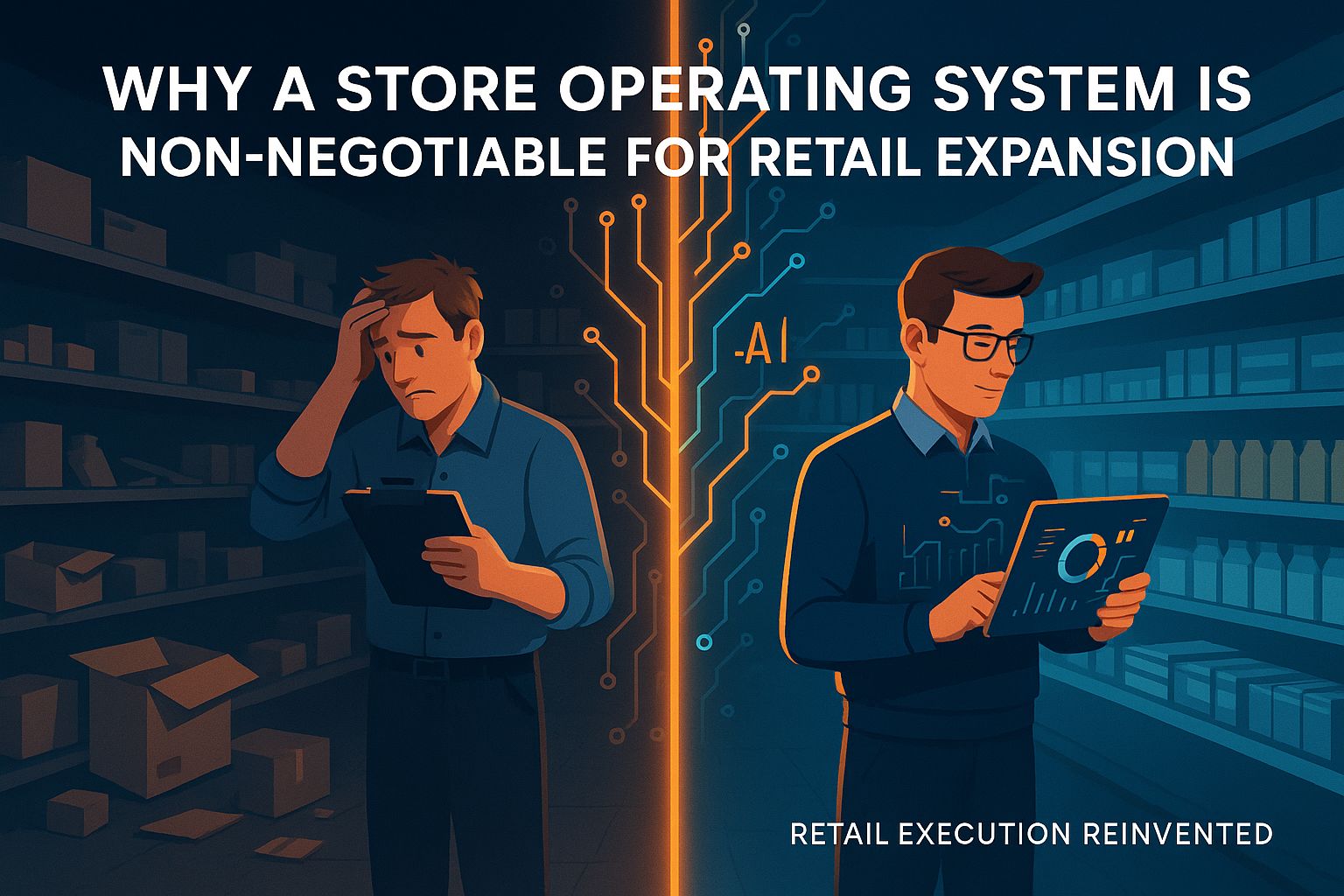
Why a Store Operating System is Non-Negotiable for Retail Expansion
Retail expansion brings complexity. Discover how a Store Operating System (SOS) transforms chaos into control with AI-powered execution, real-time insights, and unified operations.
Read More
Why Shoppers Walk Away
Learn why product availability is the foundation of customer experience. See how one “Out of Stock” sign can impact sales, loyalty, and reputation and how retail AI can stop it from happening.
Read More

The Imperfect Shelf Is Destroying Your Stores. Here’s Why.
Every misplaced product, wrong price tag, and empty shelf costs more than you think. Here’s why the imperfect shelf is retail’s hidden trillion-dollar problem.
Read More
NRF Paris 2025 Day 3 Recap: Unified Commerce & AI
Day 3 of NRF Paris 2025 highlighted unified commerce, AI-driven personalization, omnichannel innovation, and the future of customer experience in retail.
Read More
NRF Paris 2025 Day 2 Recap: Ai, data and customer centric strategies
Day 2 of NRF Paris 2025 showcased how retailers are using AI, data, and customer-centric strategies to transform payments, supply chains, loyalty, and in-store experiences. From community sponsorships with Snipes & PSG to MediaMarktSaturn’s omnichannel reinvention, the event highlighted the future of retail with personalization, automation, and next-gen customer engagement.
Read More

NRF Paris 2025 Day 1 Recap: AI, Payments & Omnichannel Innovation
Discover the highlights from Day 1 of NRF Paris 2025 – Retail’s Big Show Europe. From AI-powered retail operations and evolving payment solutions to omnichannel strategies and sustainability, here’s how leaders are shaping the future of retail.
Read More
We Are Attending NRF 2025: Retail’s Big Show Europe
Join OmniShelf at NRF Paris 2025, where innovation meets retail. Join us at Europe's premier event to explore cutting-edge solutions for the future of shopping.
Read More
Are Your Shelves Killing Your Sales?
Learn how poor shelf execution silently kills retail sales and how smarter real time solutions can improve revenue, trust and efficiency.
Read More

Why a Store Operating System is Non-Negotiable for Retail Expansion
Discover why spreadsheets and manual processes can cripple retail expansion. Learn how a Store Operating System (SOS) eliminates out-of-stocks, boosts shelf compliance, prevents staff burnout, and enables data-driven growth for modern retailers.
Read More

From Dock to Display: Closing the C-Store Execution Gap
The mission was clear. A major beverage brand spent millions to launch its new energy drink, meticulously planning every detail down to the cooler placement in thousands of convenience stores nationwide.
Read More

The Invisible Threat to Retail: How Phantom Inventory Haunts Southeast Asia
Discover how phantom inventory silently drains profits in Southeast Asia’s retail sector. Learn the causes, consequences, and strategic solutions to eliminate this invisible threat.
Read More
How AI Can Help You Manage the Store (At Every Level)
Learn how applied AI is transforming retail operations by reducing decision fatigue, preventing stockouts, and improving execution at the store, area manager, and headquarters levels with the OmniShelf Store Operating System.
Read More
The Trillion-Dollar Problem: How Poor Shelf Execution is Costing Retailers Billions
Poor shelf execution is costing retailers billions. This blog explores how out-of-stocks, pricing errors, and misplaced items sabotage sales and erode trust—even when products are in-store. Learn why traditional methods and outdated tech fall short, and how OmniShelf’s AI-powered, real-time shelf operating system helps prevent lost revenue, even without internet access.
Read More
What we learned at Shoptalk Europe 2025
Omnishelf joined retailers and tech leaders at Shoptalk Europe 2025 to explore what’s next for the retail shelf. Here’s our take on the trends that matter.
Read More

Live from Zebra DevCon 2025: Real Retail Problems, Real Solutions
OmniShelf is proud to be here on the ground. We’re showcasing how our real-time shelf intelligence tool helps store teams save time, improve shelf execution, and increase sales without needing extra hardware.
Read More

Meet Us at NRF Singapore 2025
Discover how OmniShelf and Zebra Technologies are transforming shelf management with real-time retail intelligence at NRF Singapore 2025. Visit us for live demos and expert insights.
Read More
