Tech
What Actually Happens When You Put AI Inside an Engineering Team
AI coding tools are transforming software engineering, but not always for the better. Our CTO explores how AI is reshaping developer roles, creating new risks for junior engineers, and shifting the real bottleneck from writing code to thinking.
Reading Time
0 Minutes
Table of Contents
Expand
Authored By

Călin Ciobanu
Co-founder & CTO
A few months ago, I tested AI coding tools the same way I test any new technology: I gave them a real task; something we would actually ship.
At first, it looked promising. The code compiled. It even solved part of the problem. Then we tried to integrate it. That’s when things started to break. It misunderstood context, added hallucinated logic, and solved one thing while quietly breaking another. What should have taken one hour turned into three.
At that point, the tool was a liability. This experience reflects a broader trend in the industry. Research from GitClear, which analyzed a massive dataset of 153 million changed lines of code across both major open-source projects and enterprise commercial repositories, found a disconcerting trend: code churn (code that is reverted or updated within two weeks) is projected to double in 2024 compared to its pre-AI baseline.
That was just a few months ago. Today, I ran a similar test. Same approach, but the output was different. It handled context better and made fewer unnecessary assumptions. It actually saved time.
The divide in engineering is no longer about whether the tools work, but how different roles adapt to them.
The Four Responses to the AI Shift
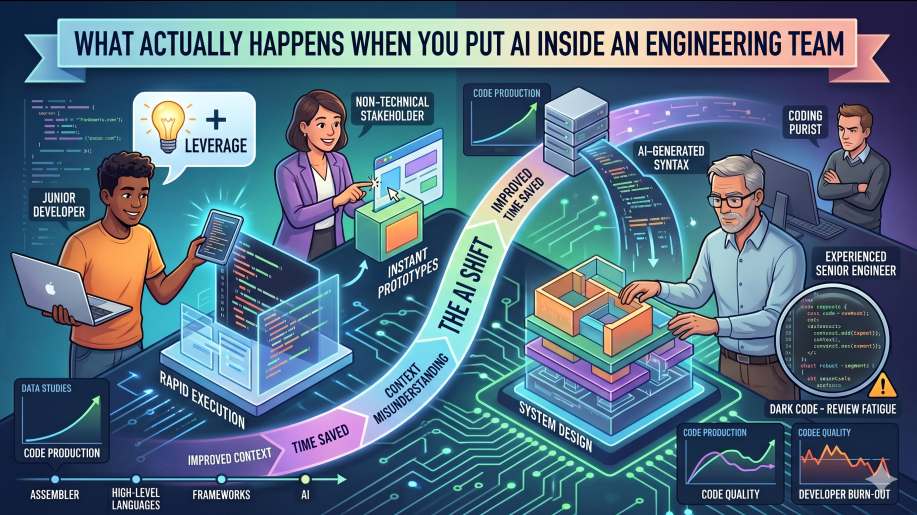
When people talk about AI in engineering, they usually speak in general terms. In reality, the impact is highly fragmented. We are seeing a divergence in how different roles internalize these tools, creating a new team dynamic that leaders have to manage carefully.
Junior developers are often the most vocal early adopters because AI provides them with instant leverage. They can suddenly build complex features, test architectural ideas, and generate boilerplate that previously required years of rote practice to master.
However, this creates a hidden risk of learning debt. By skipping the manual struggle of building systems from scratch, juniors may fail to develop the deep intuition that comes from making and manually fixing painful mistakes.
On the other side of the spectrum, non-technical stakeholders are seeing a massive reduction in the barrier to execution. For basic tasks like simple scripts, data visualizations, or internal prototypes, the outcome matters more than the elegance of the code.
AI removes the need to hire for basic execution in these cases. While this empowers the business, it risks creating a "shadow IT" layer of AI-generated code that lacks long-term maintainability or security oversight.
Just like fellow seniors, I see these tools as an extension of my thinking: a way to automate the syntax tax so I can focus on system design and edge cases. In fact, the bottleneck has always been problem-solving. However, this shift introduces review fatigue. Senior engineers are getting buried under what we call "dark code."
This is the extra, messy code that AI agents make when they do not fully understand the goal of a project. As highlighted by research from Uplevel, seniors are finding that auditing AI-generated code is often more mentally taxing than writing it from scratch, as it requires hyper-vigilance against subtle, confident-looking bugs.
To stop this tired feeling, we need to make sure AI agents create clear and simple code that is easy for a human to check. We have been testing ways to cut down on this messy dark code and I will share those tips in a future post.
Finally, there is a fourth group: the Purists who built their professional identity around the mastery of code. For those who take pride in the craft of a perfectly optimized function, the shift to AI can feel like a devaluation of their life's work. Some adapt quickly, moving their craftsmanship to a higher level of abstraction, while others resist. This resistance usually stems from the fact that the tool challenges the very definition of what makes a developer valuable in a post-generative world.
This Is Not the First Time
If you’ve been in this industry long enough, this pattern feels familiar. We have a history of abstraction. There was a time when writing efficient assembler code was a skill few people had. Then higher-level languages came. Then frameworks.
The industry expanded rather than collapsed during those shifts. According to Jevons Paradox, as a resource like code generation becomes more efficient to produce, the demand for that resource actually increases. We will likely build bigger, more complex systems rather than writing less code. The difference now is the sheer speed of the transition.
Where AI Actually Breaks Things
There is a segment of the market where the impact is immediate and disruptive: Commoditized Engineering. Developers working on repeatable problems, such as standard CRUD apps, basic dashboards, and simple integrations, are seeing their value proposition shift.
AI excels at pattern matching. If you are building something that has been done thousands of times before, the tool can get you 90% of the way there in seconds. From a business perspective, generating a solution in minutes is a significant change in the cost-to-value equation.
Where AI Becomes a Force Multiplier
In our work, we deal with problems that are not standard: performance constraints, edge cases, and systems that don’t exist yet. In those situations, thinking remains the bottleneck.
Translating a solution from your head into code can take hours or days of writing, testing, and fixing. AI changes that. You can describe an idea and see it implemented quickly. The role is changing:
- Less time writing: The syntax tax is disappearing.
- More time deciding: You can test multiple approaches in the time it used to take to build one.
The Uncomfortable Question About Juniors
Junior developers face a unique challenge. If the system is more capable than the user, how does the user maintain control? Relying on tools from day one might skip the struggle that builds intuition. This creates a gap where experienced engineers benefit immediately, but juniors need to find a different path to mastery.
Reviewing code requires a deeper level of understanding than writing it. Without the ability to write the code manually, a developer's ability to validate an AI's output is fundamentally limited.
What I Would Do if I Started Today
If I had to start again in this environment, I would not focus on writing code faster. I would focus on building real things. I would move past tutorials and solve real solutions to real problems.
At the same time, I would invest in understanding systems deeply. How they connect, how they fail, and how they scale. Understanding concepts like the CAP Theorem or distributed systems is now more valuable than memorizing syntax. Execution is becoming easier; understanding remains difficult.
The Bigger Picture
Layoffs and job replacement are frequent topics of discussion, but the truth is nuanced. Some current changes reflect corrections from previous hiring cycles or increased efficiency. Underneath that, there is real progress in capability.
In the future, senior engineers will likely move into a role called a product owner. Instead of spending all day typing out code, they will work closely with managers to solve big business problems. Their job will be to plan how a feature should work and why it matters rather than just doing the manual work of writing it.
For engineers who love the deep technical side of things, there is a second path called the hard problem-solving track. This role is all about working on very fast systems and difficult math problems like the work done at big tech companies.
We see both paths in our own team today. Some of our engineers focus on the product while others like Norbert on our SDK team work on the hardest technical challenges. Both paths show that humans provide a special kind of value that AI agents just cannot match.
If you’re leading an engineering team today, the question is how to integrate these tools without creating more problems than you solve. Used incorrectly, they introduce noise and false confidence. Used correctly, they remove friction and accelerate execution.
That balance is the real work now, and most teams are still figuring it out.
Sources
- GitClear (2024): Coding on Copilot: 2024 Data Shows AI’s Downward Pressure on Code Quality. A study of 153 million lines of code documenting the rise of code churn and the decline of code reuse.
- Uplevel (2024): AI Coding Assistant Impact on Developer Productivity and Burnout. Research indicates that while AI speed increases, developer burnout remains high due to increased cognitive load during code review.
- Gartner (2024): Hype Cycle for Software Engineering. Analysis on the rapid adoption of AI assistants and the shift toward "AI-Augmented" development roles.
- Economics: The Jevons Paradox. An economic principle explaining why increased efficiency in a resource leads to an increase in its overall consumption.
- Computer Science: The CAP Theorem. A fundamental principle of distributed systems that remains a critical bottleneck for human-led architectural decision-making.
INSIGHTS & UPDATES
Explore More from the OmniShelf Blog
Stay ahead of the curve with deeper insights, product updates, and industry trends shaping the future of retail technology. Discover more stories that matter to your business.
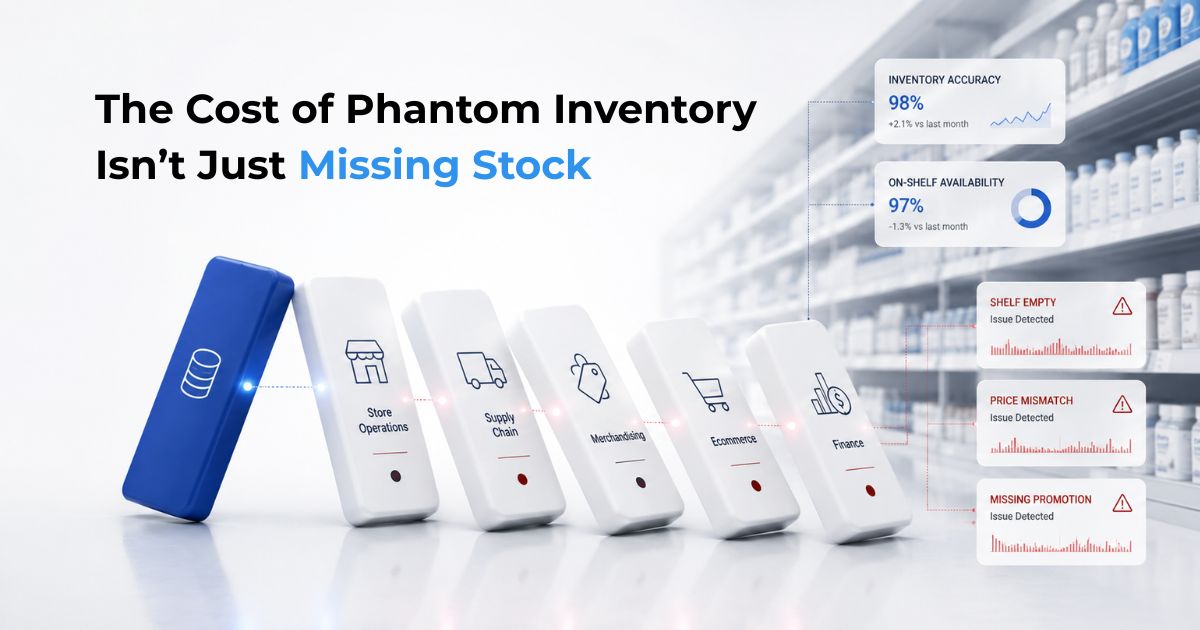
Phantom Inventory: More Than an Inventory Problem
Why phantom inventory keeps hurting retailers even after "fixing" the numbers, and the 3-step fix that stops bad data from spreading across teams.
Read More
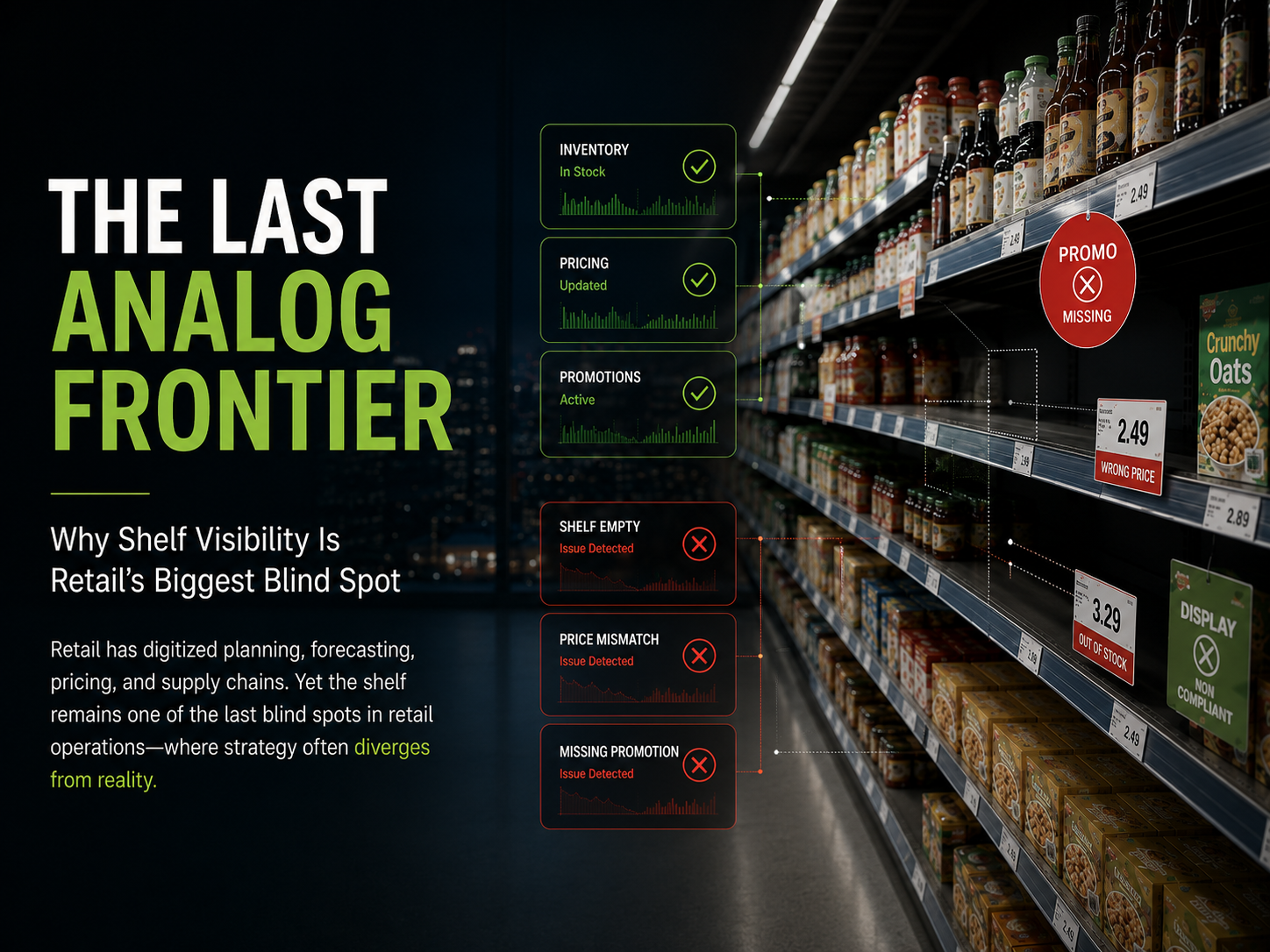
The Last Analog Frontier: Why Shelf Visibility Is Retail's Biggest Blind Spot
Retail has digitized almost everything, except the shelf. Discover why closing the retail execution gap is becoming one of the industry's biggest competitive advantages
Read More
OmniShelf Named Digital Shelf Analytics Solution of the Year at the 2026 RetailTech Breakthrough Awards
OmniShelf Store Operating System has been named the 2026 Digital Shelf Analytics Solution of the Year by RetailTech Breakthrough, recognizing innovation in retail execution, shelf visibility, and store operations.
Read More

5 Reasons Planogram Compliance Fails in Retail Stores (And How to Fix It)
Planogram compliance often drops the moment a shelf is restocked. Discover why manual audits fail and how AI-powered computer vision turns "the last yard" into a competitive advantage.
Read More

What Actually Happens When You Put AI Inside an Engineering Team
AI coding tools are transforming software engineering, but not always for the better. Our CTO explores how AI is reshaping developer roles, creating new risks for junior engineers, and shifting the real bottleneck from writing code to thinking.
Read More
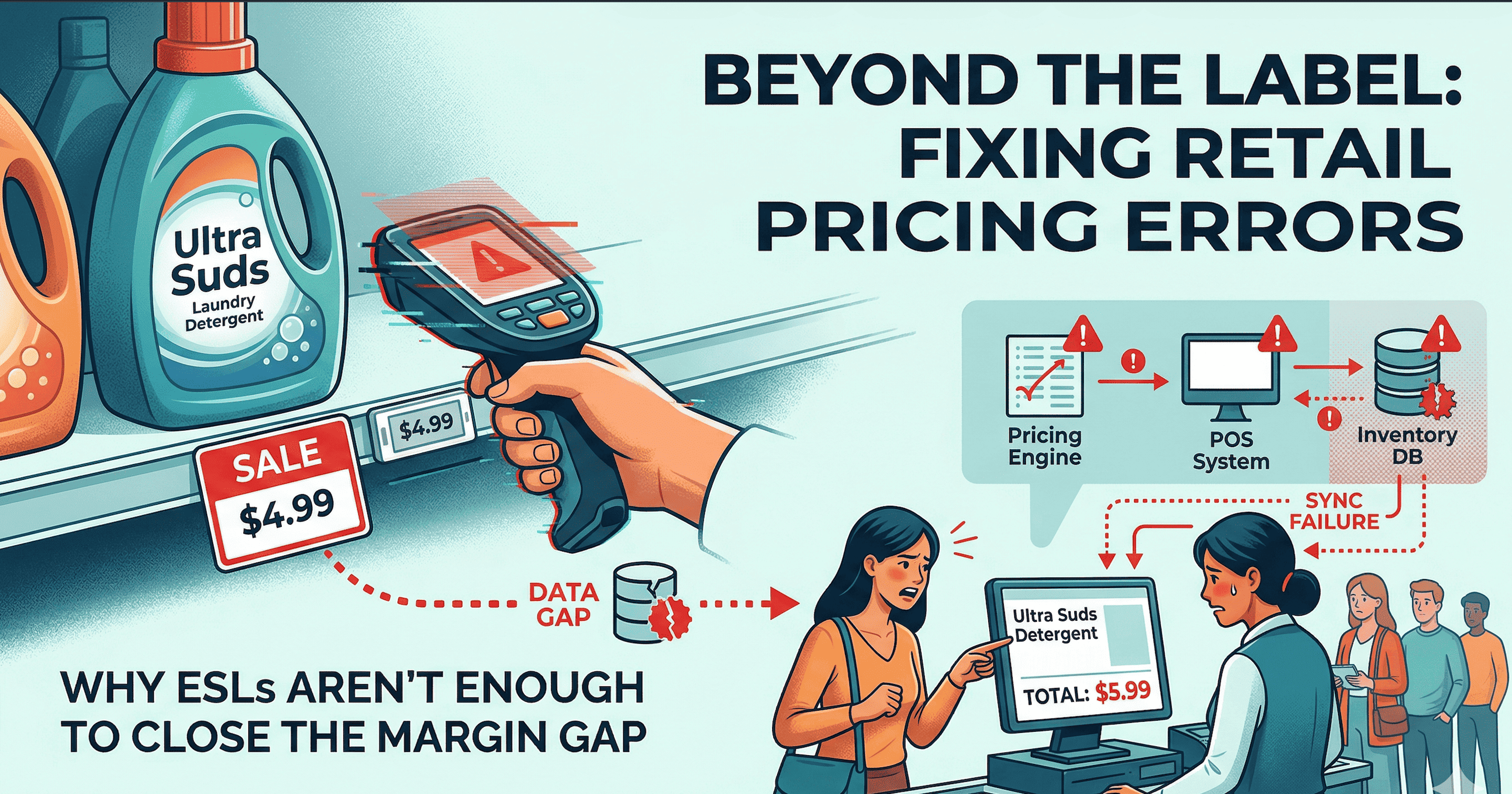
Why ESLs Are Not Enough To Close The Margin Gap
Retailers lose billions due to pricing errors even with electronic shelf labels. Discover why execution gaps persist and how to ensure accurate, real-time pricing across every store.
Read More
Why No Strategy Will Fix The Execution Failure
Effective retail execution is the critical link between leadership decisions and the actual customer experience at the store. Despite having sound strategies, many retailers suffer from revenue loss due to inconsistent store operations, such as incorrect shelf placement, inaccurate pricing, and failed promotions. Our CEO Lukasz Piotrowski talks about what makes the execution gap and how to fix it.
Read More
Why AI Agents Will Disrupt Retail Analytics
Reflections from our CTO why Ai agents will change how we look at retail analytics.
Read More

Building Deep Tech Engineering Teams When the Path Is Not Written Yet
In deep tech, linear progress is a myth and breakthroughs don't follow a schedule. This article explores the transition from scientific uncertainty to a scalable system, arguing that shared context and adaptability are the keys to solving impossible problems.
Read More

We are heading to EuroShop ( here’s what to expect)
Discover why OmniShelf is attending EuroShop 2026 to tackle real store execution challenges, improve shelf availability, and scale retail operations.
Read More

Lessons From a Decade in AI
Discover how scaling, data, generalisation, and hardware efficiency drive today’s AI systems, and why the future of AI is moving toward on-device performance.
Read More

The OmniShelf Store Operating System: Redefining Retail Execution with Edge AI
Discover how the OmniShelf StoreOS unifies operations, marketing, inventory, and data to eliminate retail blind spots and improve execution across every store.
Read More
The Evolution of Computer Vision And Why the Future Belongs to the Edge
Discover how computer vision evolved from handcrafted algorithms to multimodal AI and why the future of visual intelligence is moving to the edge.
Read More
Elevate 2025 Highlights
OmniShelf joined forces with SOTI at monday.com Elevate 2025 to showcase how AI, automation, and real-time shelf visibility are transforming retail operations. Discover key highlights and insights from the event.
Read More
GS1 Hong Kong Retail Summit 2025 Highlights
From AI-powered supply chains to sustainable business transformation, here’s what industry leaders shared at the GS1 Hong Kong Retail Forum 2025 about building smarter, more resilient retail ecosystems
Read More

How Computer Vision is Revolutionizing Retail
Discover how AI-powered computer vision is revolutionizing retail operations. From preventing theft and managing inventory to enhancing customer experience, see how this technology, powered by edge computing, is reshaping the modern shopping experience.
Read More

Why a Store Operating System is Non-Negotiable for Retail Expansion
Retail expansion brings complexity. Discover how a Store Operating System (SOS) transforms chaos into control with AI-powered execution, real-time insights, and unified operations.
Read More
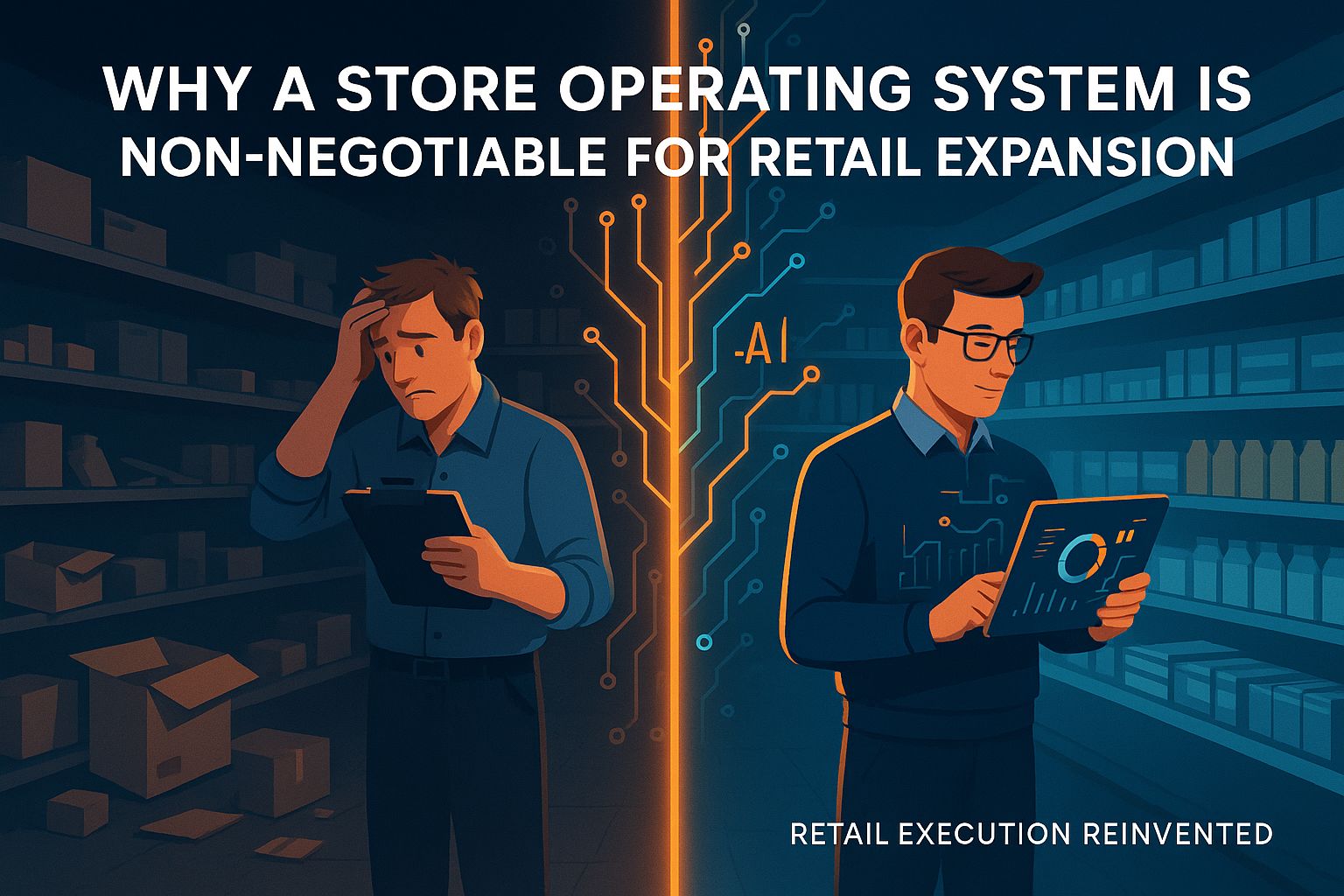
Why Shoppers Walk Away
Learn why product availability is the foundation of customer experience. See how one “Out of Stock” sign can impact sales, loyalty, and reputation and how retail AI can stop it from happening.
Read More

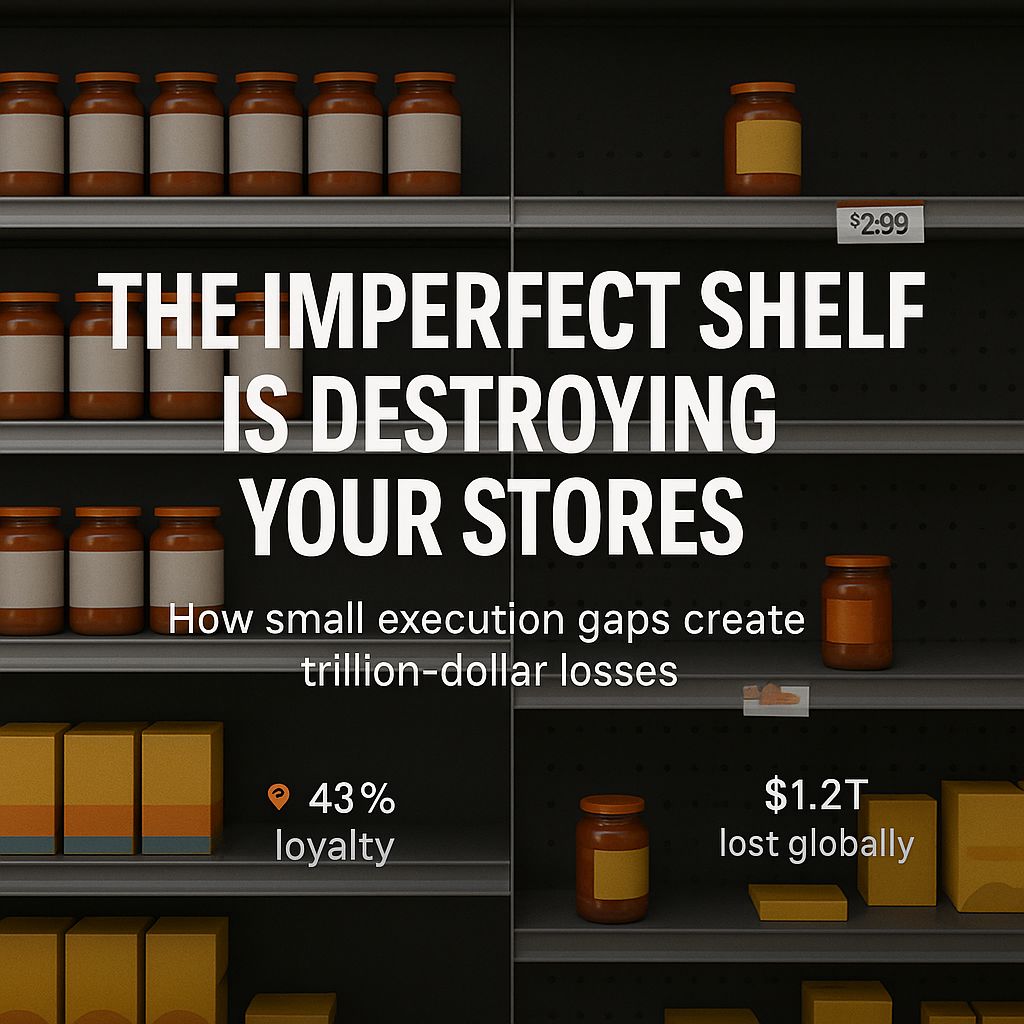
The Imperfect Shelf Is Destroying Your Stores. Here’s Why.
Every misplaced product, wrong price tag, and empty shelf costs more than you think. Here’s why the imperfect shelf is retail’s hidden trillion-dollar problem.
Read More
NRF Paris 2025 Day 3 Recap: Unified Commerce & AI
Day 3 of NRF Paris 2025 highlighted unified commerce, AI-driven personalization, omnichannel innovation, and the future of customer experience in retail.
Read More
NRF Paris 2025 Day 2 Recap: Ai, data and customer centric strategies
Day 2 of NRF Paris 2025 showcased how retailers are using AI, data, and customer-centric strategies to transform payments, supply chains, loyalty, and in-store experiences. From community sponsorships with Snipes & PSG to MediaMarktSaturn’s omnichannel reinvention, the event highlighted the future of retail with personalization, automation, and next-gen customer engagement.
Read More
NRF Paris 2025 Day 1 Recap: AI, Payments & Omnichannel Innovation
Discover the highlights from Day 1 of NRF Paris 2025 – Retail’s Big Show Europe. From AI-powered retail operations and evolving payment solutions to omnichannel strategies and sustainability, here’s how leaders are shaping the future of retail.
Read More
We Are Attending NRF 2025: Retail’s Big Show Europe
Join OmniShelf at NRF Paris 2025, where innovation meets retail. Join us at Europe's premier event to explore cutting-edge solutions for the future of shopping.
Read More

Are Your Shelves Killing Your Sales?
Learn how poor shelf execution silently kills retail sales and how smarter real time solutions can improve revenue, trust and efficiency.
Read More

Why a Store Operating System is Non-Negotiable for Retail Expansion
Discover why spreadsheets and manual processes can cripple retail expansion. Learn how a Store Operating System (SOS) eliminates out-of-stocks, boosts shelf compliance, prevents staff burnout, and enables data-driven growth for modern retailers.
Read More

From Dock to Display: Closing the C-Store Execution Gap
The mission was clear. A major beverage brand spent millions to launch its new energy drink, meticulously planning every detail down to the cooler placement in thousands of convenience stores nationwide.
Read More

The Invisible Threat to Retail: How Phantom Inventory Haunts Southeast Asia
Discover how phantom inventory silently drains profits in Southeast Asia’s retail sector. Learn the causes, consequences, and strategic solutions to eliminate this invisible threat.
Read More

How AI Can Help You Manage the Store (At Every Level)
Learn how applied AI is transforming retail operations by reducing decision fatigue, preventing stockouts, and improving execution at the store, area manager, and headquarters levels with the OmniShelf Store Operating System.
Read More
The Trillion-Dollar Problem: How Poor Shelf Execution is Costing Retailers Billions
Poor shelf execution is costing retailers billions. This blog explores how out-of-stocks, pricing errors, and misplaced items sabotage sales and erode trust—even when products are in-store. Learn why traditional methods and outdated tech fall short, and how OmniShelf’s AI-powered, real-time shelf operating system helps prevent lost revenue, even without internet access.
Read More

What we learned at Shoptalk Europe 2025
Omnishelf joined retailers and tech leaders at Shoptalk Europe 2025 to explore what’s next for the retail shelf. Here’s our take on the trends that matter.
Read More

Live from Zebra DevCon 2025: Real Retail Problems, Real Solutions
OmniShelf is proud to be here on the ground. We’re showcasing how our real-time shelf intelligence tool helps store teams save time, improve shelf execution, and increase sales without needing extra hardware.
Read More

Meet Us at NRF Singapore 2025
Discover how OmniShelf and Zebra Technologies are transforming shelf management with real-time retail intelligence at NRF Singapore 2025. Visit us for live demos and expert insights.
Read More
