Retail
5 Reasons Planogram Compliance Fails in Retail Stores (And How to Fix It)
Planogram compliance often drops the moment a shelf is restocked. Discover why manual audits fail and how AI-powered computer vision turns "the last yard" into a competitive advantage.
Reading Time
5 Minutes
Authored By

Lukasz Piotrowski
CEO & Founder
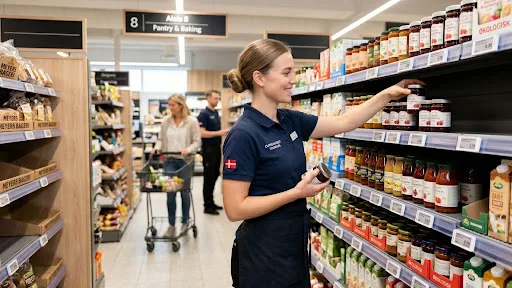
A planogram looks perfect in the system. Products are in the right positions. Facings are correct. The promotional display is set. Then a store associate restocks the aisle. A delivery driver unloads in a rush. A stockout forces a quick substitution. By the time the weekly audit arrives, the shelf looks nothing like the plan.
The gap between plan and reality is costing the industry more than most realise. NielsenIQ (2024) estimates that poor shelf placement can cut in-store sales by 20%. IHL Services reports that global inventory losses cost $1.77 trillion each year.
The problem is rarely the planogram design itself; it is the execution system, or the lack of one. Learn more about the full cost of poor shelf execution in The Trillion-Dollar Problem.
Why Planograms Fail in Retail Stores
1. Compliance Drops Every Time the Planogram Changes
When a planogram changes, compliance starts close to perfect. Products are in the right positions and the shelf matches the plan. Then daily operations take over. Staff restock under time pressure. Products get swapped. Gaps get filled with whatever is available.
The real problem is time. No one on the store floor has time to keep checking and fixing small shifts after planogram changes. Manual checking takes too long, and by the time someone spots what is wrong, the shelf has already drifted. OmniShelf and similar tools use computer vision.
This speeds up the process by 3 to 4 times. They catch issues before the next update starts the cycle again.
2. Store Staff Keep Adapting the Shelf
When a product runs out, staff fill the gap with whatever is available in the stockroom. When a variant is missing, they substitute a similar one. When time pressure is high, the priority is clearing stock, not checking compliance.
Zebra's Global Shopper Study found this through direct observation. Over half of shoppers leave stores without everything they came to buy. Out-of-stocks and misplaced products are the main reasons. 84% of retail decision-makers say real-time inventory visibility is a top priority. These adaptations are a natural response to operational pressure. HQ never sees them coming.
This is often called the "last yard" problem. Products are physically in the building but missing from the shelf. When systems show the item as "in stock," replenishment freezes and HQ never sees the empty shelf.
3. Version Confusion Removes Any Single Source of Truth
Large retailers manage hundreds of SKUs across frequent promotional cycles. HQ, regional teams, and suppliers often send different planogram versions at once. FieldPie found that 69% of store employees say outdated systems get in the way. They struggle to follow new instructions as a result.
When staff receive conflicting layouts, they fall back on the version they know. Personal judgement fills the rest. Planogram compliance becomes inconsistent by design.
4. Staff Turnover Breaks Execution Consistency
New and temporary staff rarely get full training on planogram details. Seasonal promotions and new product launches make this worse. Employee incentives often reward stocking speed over placement accuracy. Pricing labels get misplaced. POSM materials go missing.
By the time HQ notices, the shelf no longer matches what shoppers actually see.
5. Periodic Audits Catch Problems Too Late
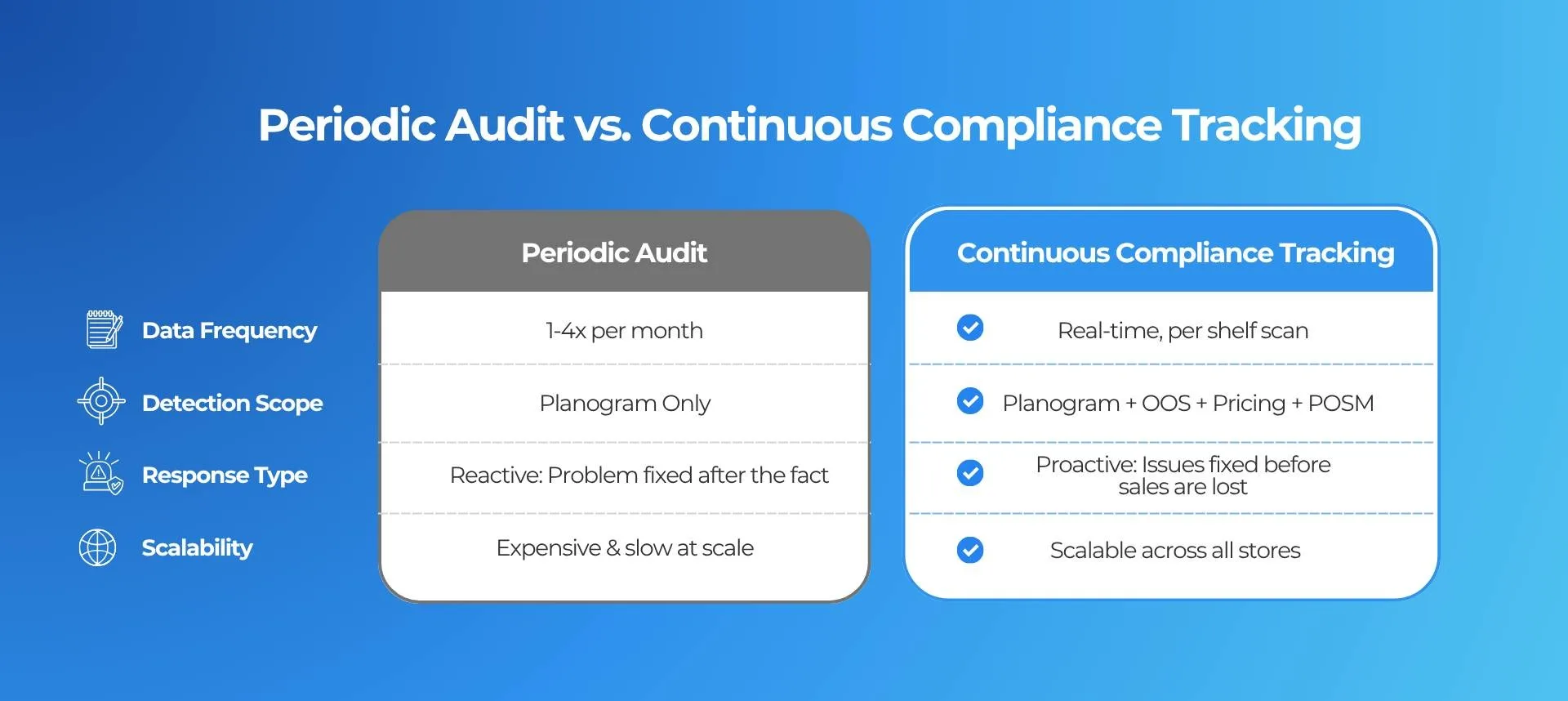
The traditional response to planogram compliance issues is the store audit. A field rep visits once a week or once a month, and a report comes back a few days later. By then, the shelf has already moved further from the plan. For CPG brands, it is even more costly.
When a merchandiser sees poor compliance, the promotion ends, and sales are lost.
A study by Cognizant found that only 57.4% of brands measure planogram compliance at all. That means almost half the industry is running blind. For the rest, there is no system in place to know whether guidelines are being followed in-store. A 2025 study from Scientific Reports backs this up. It describes manual auditing as "labour-intensive, error-prone, and costly" at scale.
How to Improve Planogram Compliance: The Case for Continuous Tracking
Perfect planogram compliance does not exist. Stock runs out, staff are stretched, and store conditions change by the hour. The main goal is to achieve maximum compliance within those limits. This needs constant visibility across every store, aisle, and shift.
OmniShelf works on this principle. Store teams scan shelves using devices they already own. No new hardware, no IT setup. The AI detects four types of issues. These are out-of-stocks, planogram deviations, pricing errors, and missing POSM materials. Staff get fix recommendations on their device right away.
All processing happens on-device via edge computing. The system works offline, which matters in stores where connectivity is inconsistent. Management gets real-time compliance dashboards across all locations. Planogram data feeds in as the single source of truth.
At scale, this is already proven. A computer vision system in 7,000 7-Eleven stores in Taiwan detected shelves with 99% accuracy. Automated compliance at that level is no longer theoretical.
The result: issues found before they cost sales, and the shelf gets as close to the plan as store reality allows.
The shelf is the most valuable real estate in your store. Some retailers treat compliance as a daily discipline. Their strategy actually shows up on the shelf.
Ready to see what your shelves actually look like? Request a demo of OmniShelf and start closing the execution gap.
Sources
1. NielsenIQ (2024): Conquering the Retail Shelf: New Omnichannel Strategies That Win: https://nielseniq.com/global/en/insights/analysis/2024/conquering-the-retail-shelf-new-omnichannel-strategies-that-win/
2. IHL Group: Fixing Inventory Distortion: Are We There Yet?: https://www.ihlservices.com/product/fixing-inventory-distortion-are-we-there-yet/
3. Zebra Technologies: 18th Annual Global Shopper Study (2025): https://www.zebra.com/us/en/about-zebra/newsroom/press-releases/2025/zebra-study-87-of-retailers-believe-gen-ai-to-have-significant-impact-on-loss-prevention.html
4. FieldPie: Planogram Compliance: Benefits, Challenges & Best Practices: https://www.fieldpie.com/blog/planogram-compliance/
5. Cognizant: Planogram Compliance: Making It Work: https://www.cosyrobo.com/InsightsWhitepapers/Planogram-Compliance-Making-It-Work.pdf?
6. Scientific Reports (2025): Real-time Retail Planogram Compliance Using Computer Vision: https://www.nature.com/articles/s41598-025-27773-5
INSIGHTS & UPDATES
Explore More from the OmniShelf Blog
Stay ahead of the curve with deeper insights, product updates, and industry trends shaping the future of retail technology. Discover more stories that matter to your business.
7-Eleven Philippines: Scaling Shelf Execution Across 4,500+ Stores
How 7-Eleven Philippines moved from periodic audits to continuous shelf scanning across 4,500+ stores, with 1.7× like-for-like sales growth and 35% better planogram compliance.
Read More

Phantom Inventory: More Than an Inventory Problem
Why phantom inventory keeps hurting retailers even after "fixing" the numbers, and the 3-step fix that stops bad data from spreading across teams.
Read More
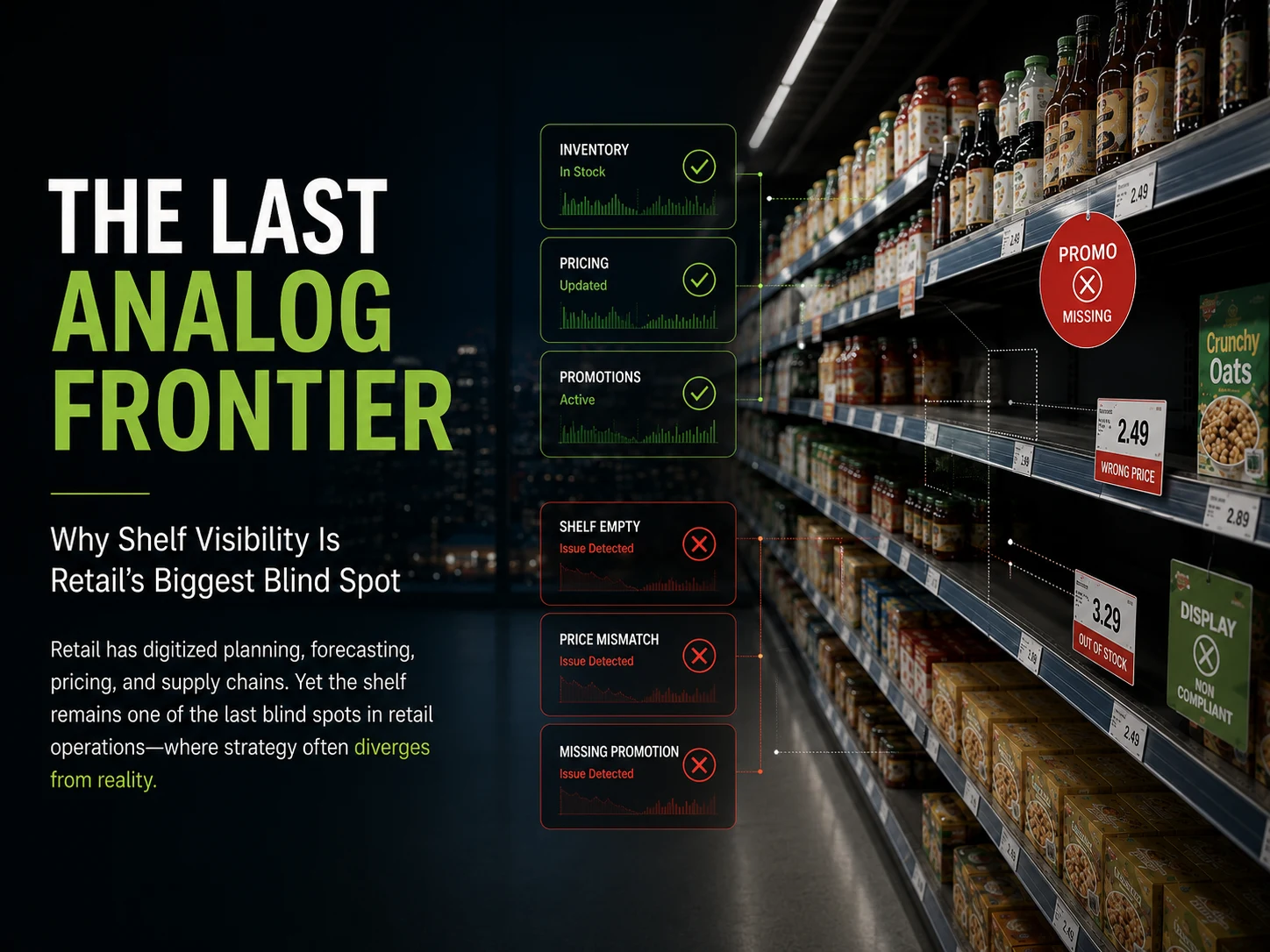
The Last Analog Frontier: Why Shelf Visibility Is Retail's Biggest Blind Spot
Retail has digitized almost everything, except the shelf. Discover why closing the retail execution gap is becoming one of the industry's biggest competitive advantages
Read More
OmniShelf Named Digital Shelf Analytics Solution of the Year at the 2026 RetailTech Breakthrough Awards
OmniShelf Store Operating System has been named the 2026 Digital Shelf Analytics Solution of the Year by RetailTech Breakthrough, recognizing innovation in retail execution, shelf visibility, and store operations.
Read More

The Next Phase of Digital Twins in Retail
Explore how digital twins are becoming production-ready in retail through accurate store data, edge AI, and actionable operational workflows.
Read More
What Actually Happens When You Put AI Inside an Engineering Team
AI coding tools are transforming software engineering, but not always for the better. Our CTO explores how AI is reshaping developer roles, creating new risks for junior engineers, and shifting the real bottleneck from writing code to thinking.
Read More
Why ESLs Are Not Enough To Close The Margin Gap
Retailers lose billions due to pricing errors even with electronic shelf labels. Discover why execution gaps persist and how to ensure accurate, real-time pricing across every store.
Read More
Why No Strategy Will Fix The Execution Failure
Effective retail execution is the critical link between leadership decisions and the actual customer experience at the store. Despite having sound strategies, many retailers suffer from revenue loss due to inconsistent store operations, such as incorrect shelf placement, inaccurate pricing, and failed promotions. Our CEO Lukasz Piotrowski talks about what makes the execution gap and how to fix it.
Read More
Why AI Agents Will Disrupt Retail Analytics
Reflections from our CTO why Ai agents will change how we look at retail analytics.
Read More

Building Deep Tech Engineering Teams When the Path Is Not Written Yet
In deep tech, linear progress is a myth and breakthroughs don't follow a schedule. This article explores the transition from scientific uncertainty to a scalable system, arguing that shared context and adaptability are the keys to solving impossible problems.
Read More
We are heading to EuroShop ( here’s what to expect)
Discover why OmniShelf is attending EuroShop 2026 to tackle real store execution challenges, improve shelf availability, and scale retail operations.
Read More
Lessons From a Decade in AI
Discover how scaling, data, generalisation, and hardware efficiency drive today’s AI systems, and why the future of AI is moving toward on-device performance.
Read More

The OmniShelf Store Operating System: Redefining Retail Execution with Edge AI
Discover how the OmniShelf StoreOS unifies operations, marketing, inventory, and data to eliminate retail blind spots and improve execution across every store.
Read More
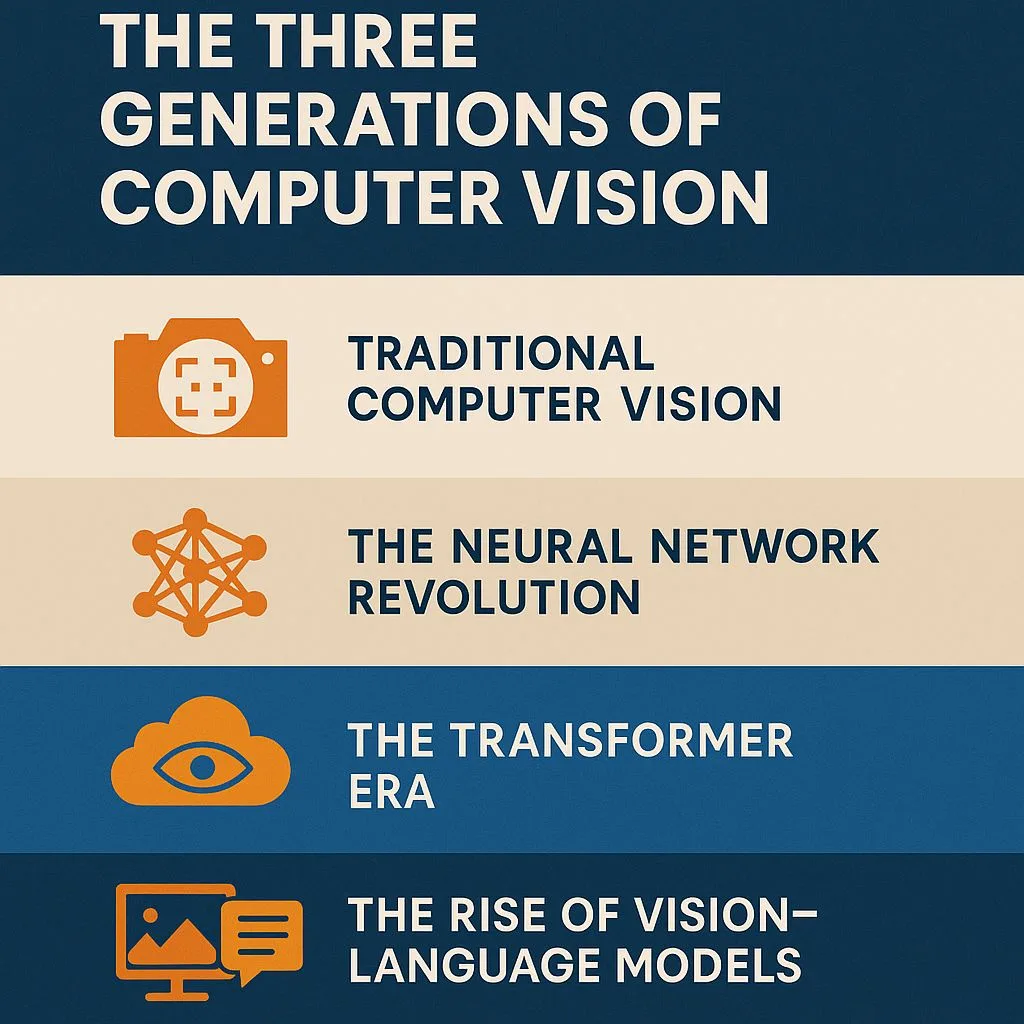
The Evolution of Computer Vision And Why the Future Belongs to the Edge
Discover how computer vision evolved from handcrafted algorithms to multimodal AI and why the future of visual intelligence is moving to the edge.
Read More
Elevate 2025 Highlights
OmniShelf joined forces with SOTI at monday.com Elevate 2025 to showcase how AI, automation, and real-time shelf visibility are transforming retail operations. Discover key highlights and insights from the event.
Read More
GS1 Hong Kong Retail Summit 2025 Highlights
From AI-powered supply chains to sustainable business transformation, here’s what industry leaders shared at the GS1 Hong Kong Retail Forum 2025 about building smarter, more resilient retail ecosystems
Read More

How Computer Vision is Revolutionizing Retail
Discover how AI-powered computer vision is revolutionizing retail operations. From preventing theft and managing inventory to enhancing customer experience, see how this technology, powered by edge computing, is reshaping the modern shopping experience.
Read More
Why a Store Operating System is Non-Negotiable for Retail Expansion
Retail expansion brings complexity. Discover how a Store Operating System (SOS) transforms chaos into control with AI-powered execution, real-time insights, and unified operations.
Read More
NRF Paris 2025 Day 3 Recap: Unified Commerce & AI
Day 3 of NRF Paris 2025 highlighted unified commerce, AI-driven personalization, omnichannel innovation, and the future of customer experience in retail.
Read More
NRF Paris 2025 Day 2 Recap: Ai, data and customer centric strategies
Day 2 of NRF Paris 2025 showcased how retailers are using AI, data, and customer-centric strategies to transform payments, supply chains, loyalty, and in-store experiences. From community sponsorships with Snipes & PSG to MediaMarktSaturn’s omnichannel reinvention, the event highlighted the future of retail with personalization, automation, and next-gen customer engagement.
Read More
NRF Paris 2025 Day 1 Recap: AI, Payments & Omnichannel Innovation
Discover the highlights from Day 1 of NRF Paris 2025 – Retail’s Big Show Europe. From AI-powered retail operations and evolving payment solutions to omnichannel strategies and sustainability, here’s how leaders are shaping the future of retail.
Read More
We Are Attending NRF 2025: Retail’s Big Show Europe
Join OmniShelf at NRF Paris 2025, where innovation meets retail. Join us at Europe's premier event to explore cutting-edge solutions for the future of shopping.
Read More
Are Your Shelves Killing Your Sales?
Learn how poor shelf execution silently kills retail sales and how smarter real time solutions can improve revenue, trust and efficiency.
Read More


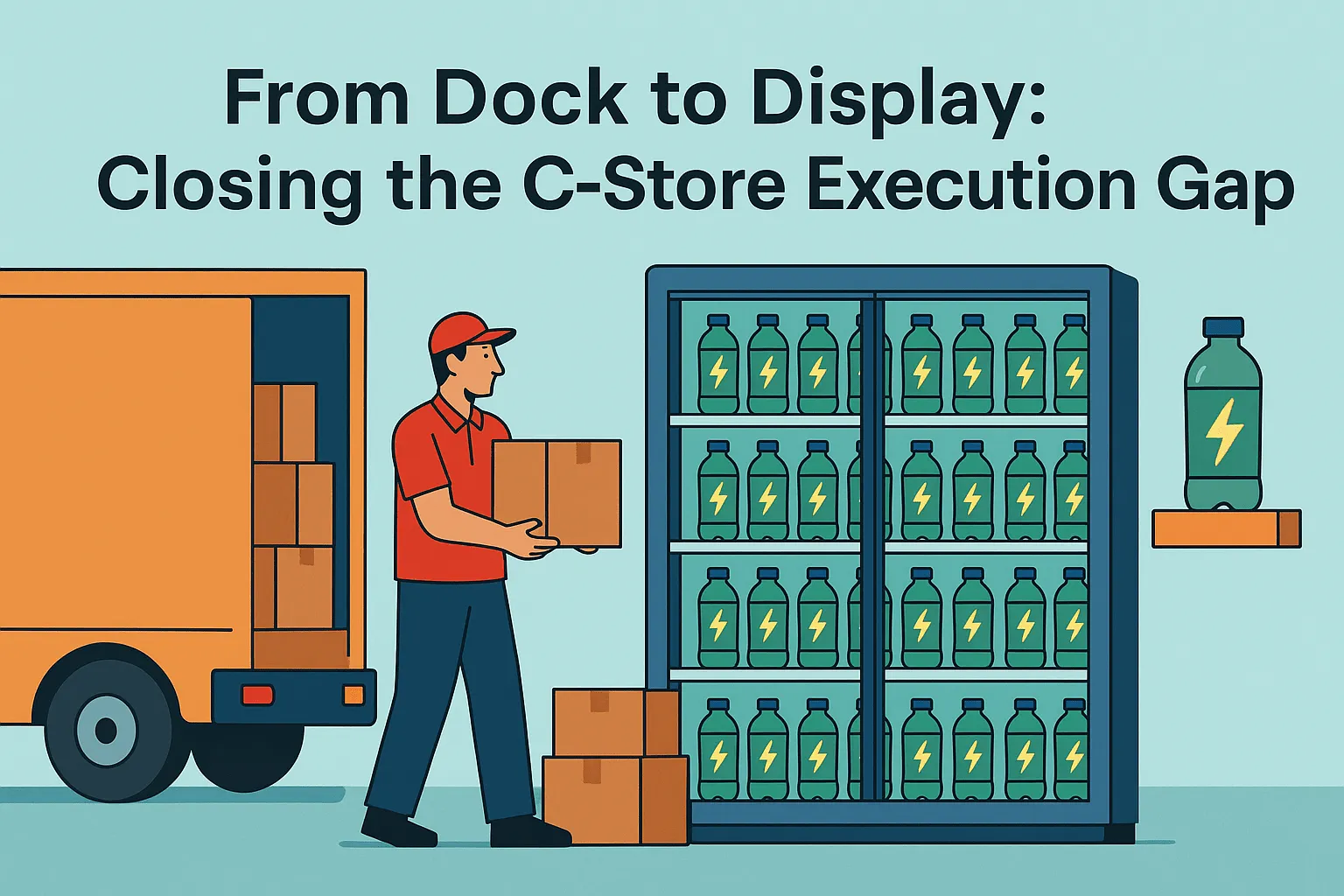
From Dock to Display: Closing the C-Store Execution Gap
The mission was clear. A major beverage brand spent millions to launch its new energy drink, meticulously planning every detail down to the cooler placement in thousands of convenience stores nationwide.
Read More
The Invisible Threat to Retail: How Phantom Inventory Haunts Southeast Asia
Discover how phantom inventory silently drains profits in Southeast Asia’s retail sector. Learn the causes, consequences, and strategic solutions to eliminate this invisible threat.
Read More
How AI Can Help You Manage the Store (At Every Level)
Learn how applied AI is transforming retail operations by reducing decision fatigue, preventing stockouts, and improving execution at the store, area manager, and headquarters levels with the OmniShelf Store Operating System.
Read More
The Trillion-Dollar Problem: How Poor Shelf Execution is Costing Retailers Billions
Poor shelf execution is costing retailers billions. This blog explores how out-of-stocks, pricing errors, and misplaced items sabotage sales and erode trust—even when products are in-store. Learn why traditional methods and outdated tech fall short, and how OmniShelf’s AI-powered, real-time shelf operating system helps prevent lost revenue, even without internet access.
Read More
What we learned at Shoptalk Europe 2025
Omnishelf joined retailers and tech leaders at Shoptalk Europe 2025 to explore what’s next for the retail shelf. Here’s our take on the trends that matter.
Read More

Live from Zebra DevCon 2025: Real Retail Problems, Real Solutions
OmniShelf is proud to be here on the ground. We’re showcasing how our real-time shelf intelligence tool helps store teams save time, improve shelf execution, and increase sales without needing extra hardware.
Read More

Meet Us at NRF Singapore 2025
Discover how OmniShelf and Zebra Technologies are transforming shelf management with real-time retail intelligence at NRF Singapore 2025. Visit us for live demos and expert insights.
Read More