Tech
Why AI Agents Will Disrupt Retail Analytics
Reflections from our CTO why Ai agents will change how we look at retail analytics.

Reading Time
0 Minutes
Table of Contents
Expand
Authored By

Călin Ciobanu
Co-founder & CTO
A few years ago I had a moment that many engineers eventually faced. I was sitting in front of a dashboard filled with metrics. Store performance, shelf availability, execution scores, alerts from different systems. Everything looked normal. The numbers were stable and nothing appeared alarming. And yet something was wrong.
A few days later we discovered the issue. A chain of small signals had been hiding in plain sight. None of them were large enough to trigger an alert on their own, but together they formed a pattern that affected store execution across several locations. The data was there. The dashboards were working exactly as designed. But nobody had connected the dots in time.
That moment stayed with me because it exposed a quiet limitation of modern analytics systems. We built tools that show us the world. We did not build tools that actively watch it for us.
This is where AI agents start to become interesting.
The Limits of Traditional Analytics
For decades analytics systems followed the same structure. Data gets collected, dashboards visualize it, and humans interpret what they see. When something looks unusual someone runs queries, investigates further, and eventually a decision is made.
This approach works well when the scale remains manageable. It begins to struggle when systems become more complex and data grows faster than human attention.
Retail is exactly that type of environment. Large retailers operate thousands of stores and generate enormous amounts of operational signals every day. Shelf activity, planogram compliance, product availability, store execution data, user interactions with systems. Even when analytics tools are sophisticated, the model still assumes someone is actively monitoring the dashboards.
Most of the time nobody is.
Adding a System That Watches
At OmniShelf we have been exploring a different layer on top of traditional analytics. Instead of relying only on dashboards and human interpretation, we introduce a system that continuously observes the data.
An AI agent.
One way to understand it is as a virtual analyst that never sleeps. The agent continuously monitors key performance indicators across the system. These indicators might relate to store execution, operational performance, user behaviour, or other signals that indicate whether retail operations are running smoothly. Periodically the agent reviews these signals and evaluates what it sees. If everything looks normal it simply moves on. If something unusual appears it begins to investigate.
The agent can ask questions about the data. Why did a certain KPI change? Which stores are affected? Is the anomaly related to user behaviour, operational execution, or data inconsistencies? Instead of relying on predefined rules alone, the system can explore multiple signals and attempt to build an explanation.
Once the agent has gathered enough context, it can propose or trigger a response.
From Insight to Action
Traditional analytics systems typically stop at insights. They surface information and expect a human to decide what to do next. AI agents introduce another step by linking observation to action.
When the system detects something unusual it can respond in several ways depending on the situation. It might notify the internal engineering team. It might alert a retailer's operations team. It might suggest a configuration adjustment to the algorithms that drive retail intelligence. In some cases it might simply ask for approval before taking action.
At the beginning human oversight remains important because trust in automated systems builds gradually. The important change is that the system notices the signal first and surfaces it immediately.
Instead of waiting for someone to discover a problem manually, the system becomes an active participant in monitoring the environment.
Why This Matters in Retail
Retail operations often experience issues that appear small at first but compound over time. A single empty shelf does not seem critical. A planogram mismatch in one store rarely triggers alarm. A minor anomaly in operational data might go unnoticed.
When these signals appear across hundreds or thousands of locations the impact becomes significant.
AI agents allow systems to monitor these signals continuously and recognize patterns much earlier than traditional workflows allow. They create a loop where the system observes activity, interprets signals, and proposes responses before the situation escalates.
For large retail environments that difference in timing can translate directly into recovered revenue and better store execution.
Lessons from Cybersecurity
The idea of automated monitoring systems actually has strong parallels in cybersecurity. Security systems constantly analyze logs, system behaviour, and access patterns looking for signs of intrusion. Most sophisticated cyber attacks are subtle and slow. An attacker might gain limited access first, then gradually move through a network without triggering obvious alarms.
No single event proves that something is wrong. But a system trained to recognize patterns can detect the progression of suspicious behaviour.
Retail analytics can follow a similar philosophy. Instead of detecting security breaches, the system monitors operational signals that indicate something is drifting away from expected behaviour.
The same principles apply: continuous observation, pattern recognition, and fast escalation when necessary.
The Strategic Context
Another reason we are exploring this direction relates to how technology ecosystems are evolving. Platforms like Microsoft Fabric are increasingly building support for agent driven workflows and analytics automation.
For companies building data infrastructure this creates a strategic opportunity. Even if AI agents are still developing as a technology, the surrounding ecosystem is moving quickly. Data pipelines, analytics platforms, and orchestration layers are starting to support these capabilities.
Preparing the infrastructure today allows organizations to integrate agent based systems more easily as the technology matures.
In many ways the most important work happens before the agent itself exists. Reliable data pipelines, consistent metrics, and scalable infrastructure are prerequisites. Without that foundation, even the most advanced AI system cannot interpret the environment correctly.
The Concept of a Virtual Worker
When people ask what an AI agent really represents inside a system, I often describe it as a virtual worker. The organization defines what the agent should observe, how it should interpret signals, and how it should respond when certain patterns appear.
In practice this often resembles an operational playbook. The agent receives guidelines about which metrics matter, which signals indicate potential issues, and which escalation paths should be followed.
Look at these indicators. Investigate related signals if something changes. Notify the appropriate team if confidence is high. Request clarification if uncertainty remains. Within those boundaries the agent can explore the data and form hypotheses before proposing actions.
Looking Ahead
AI agents currently generate a lot of discussion across the technology landscape. Some believe they will replace entire categories of work. Others see them as another short lived hype cycle.
In practice the truth will likely emerge somewhere in between. The technology is evolving quickly, but its most valuable applications will appear gradually through practical systems rather than dramatic announcements.
In retail analytics I believe their role will be relatively simple but extremely useful. They will become the systems that observe operational signals continuously and highlight patterns that humans might miss.
Sometimes they will escalate a problem early. In other cases they may resolve small issues before anyone notices them.
When that happens consistently, organizations move from reactive operations toward systems that actively maintain their own health. That is where AI agents begin to show their real value.
Sources
- IHL Services. Retail Inventory Distortion and Out-of-Stock Research
https://www.ihlservices.com/news/analyst-corner/2025/09/retail-inventory-crisis-persists-despite-172-billion-in-improvements/ - Retail Insight. Improving Inventory Accuracy Through Innovation
https://www.retailinsight.io/hubfs/Improving%20Inventory%20Accuracy%20Through%20Innovation.pdf - MIT Sloan. Agentic AI Explained
https://mitsloan.mit.edu/ideas-made-to-matter/agentic-ai-explained - UiPath. What Are AI Agents?
https://www.uipath.com/ai/ai-agents - Microsoft. Microsoft Fabric Real-Time Intelligence and Operations Agent
https://learn.microsoft.com/en-us/fabric/real-time-intelligence/operations-agent - OmniShelf. The Imperfect Shelf Is Destroying Your Stores
https://www.omnishelf.io/blogs/the-imperfect-shelf-is-destroying-your-stores-heres-why - Microsoft Industry Blog. Retail Ready: Agentic AI Built for the Future of Retail
https://www.microsoft.com/en-us/industry/blog/retail/2025/01/09/retail-ready-agentic-ai-built-for-the-future-of-retail-ready-now/
INSIGHTS & UPDATES
Explore More from the OmniShelf Blog
Stay ahead of the curve with deeper insights, product updates, and industry trends shaping the future of retail technology. Discover more stories that matter to your business.
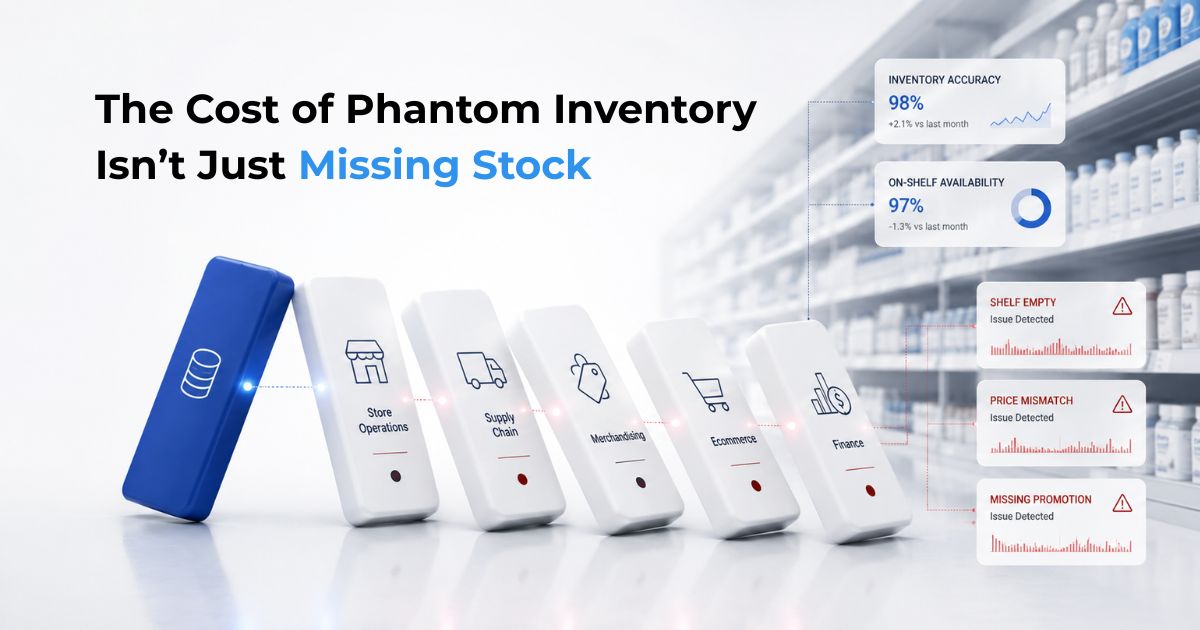
Phantom Inventory: More Than an Inventory Problem
Why phantom inventory keeps hurting retailers even after "fixing" the numbers, and the 3-step fix that stops bad data from spreading across teams.
Read More
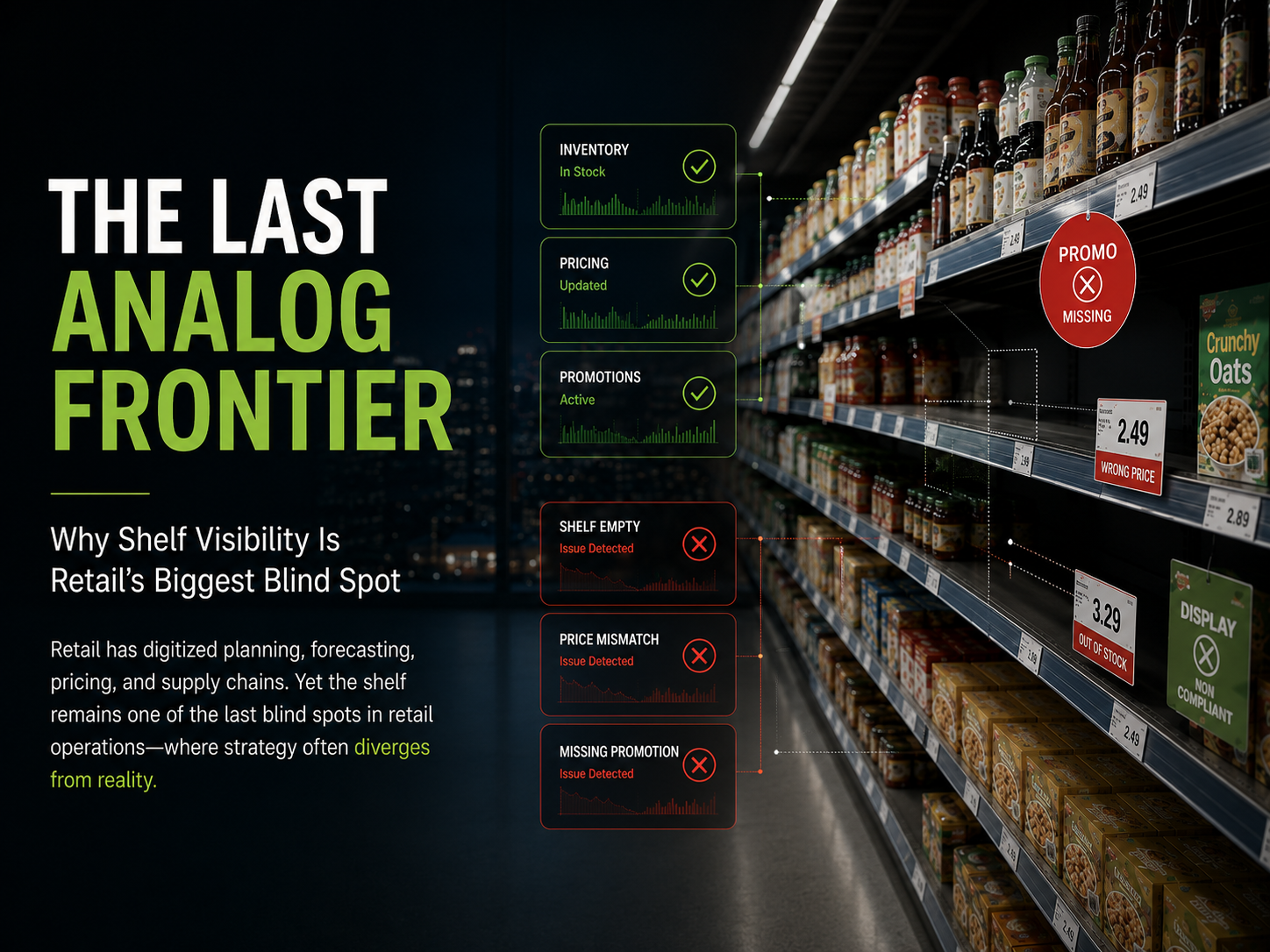
The Last Analog Frontier: Why Shelf Visibility Is Retail's Biggest Blind Spot
Retail has digitized almost everything, except the shelf. Discover why closing the retail execution gap is becoming one of the industry's biggest competitive advantages
Read More
OmniShelf Named Digital Shelf Analytics Solution of the Year at the 2026 RetailTech Breakthrough Awards
OmniShelf Store Operating System has been named the 2026 Digital Shelf Analytics Solution of the Year by RetailTech Breakthrough, recognizing innovation in retail execution, shelf visibility, and store operations.
Read More

5 Reasons Planogram Compliance Fails in Retail Stores (And How to Fix It)
Planogram compliance often drops the moment a shelf is restocked. Discover why manual audits fail and how AI-powered computer vision turns "the last yard" into a competitive advantage.
Read More
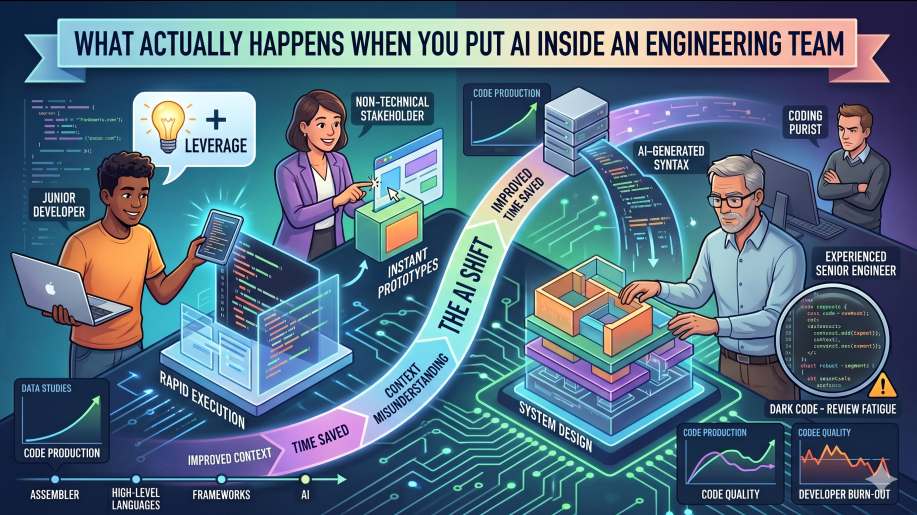
What Actually Happens When You Put AI Inside an Engineering Team
AI coding tools are transforming software engineering, but not always for the better. Our CTO explores how AI is reshaping developer roles, creating new risks for junior engineers, and shifting the real bottleneck from writing code to thinking.
Read More
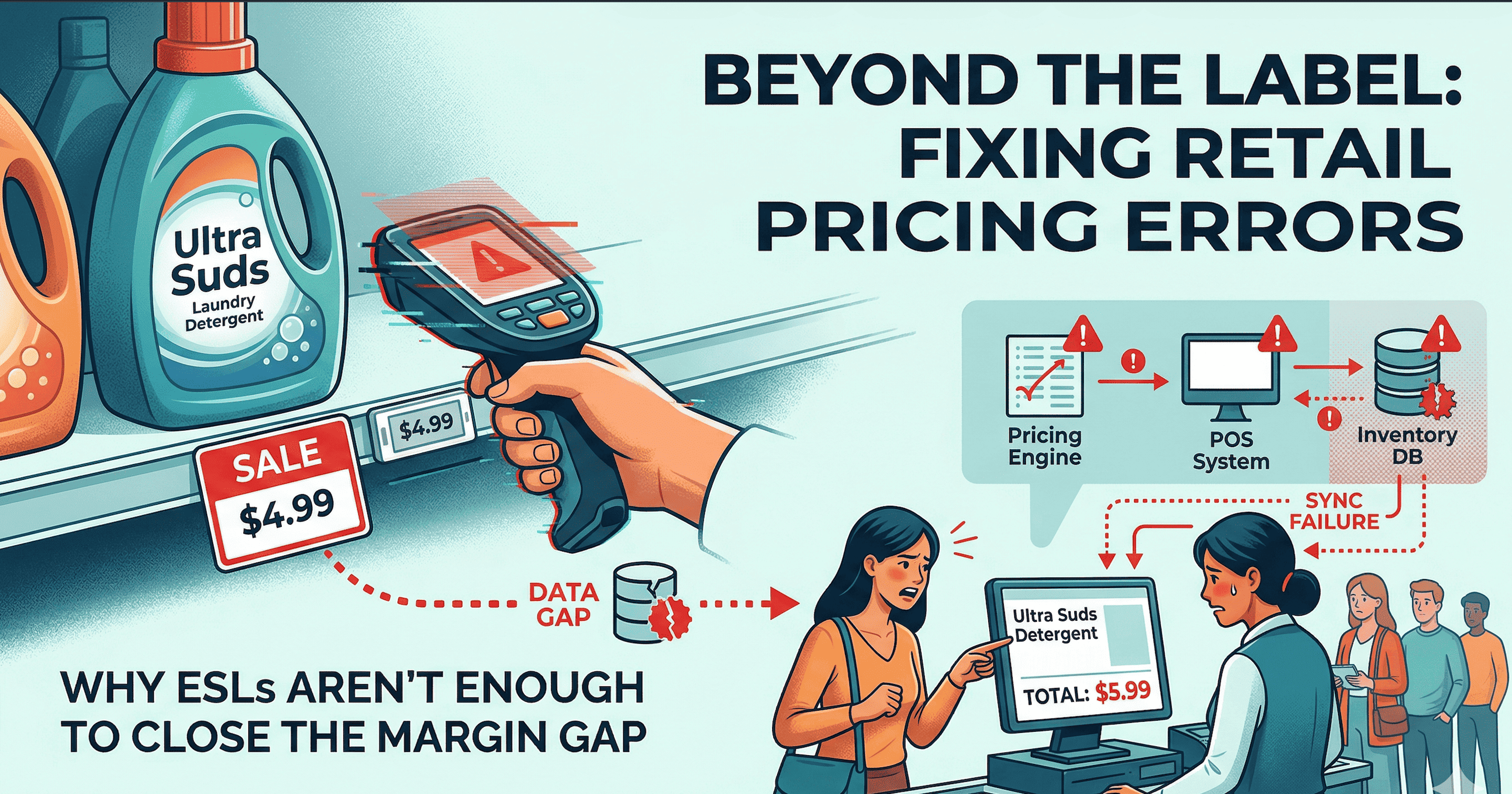
Why ESLs Are Not Enough To Close The Margin Gap
Retailers lose billions due to pricing errors even with electronic shelf labels. Discover why execution gaps persist and how to ensure accurate, real-time pricing across every store.
Read More
Why No Strategy Will Fix The Execution Failure
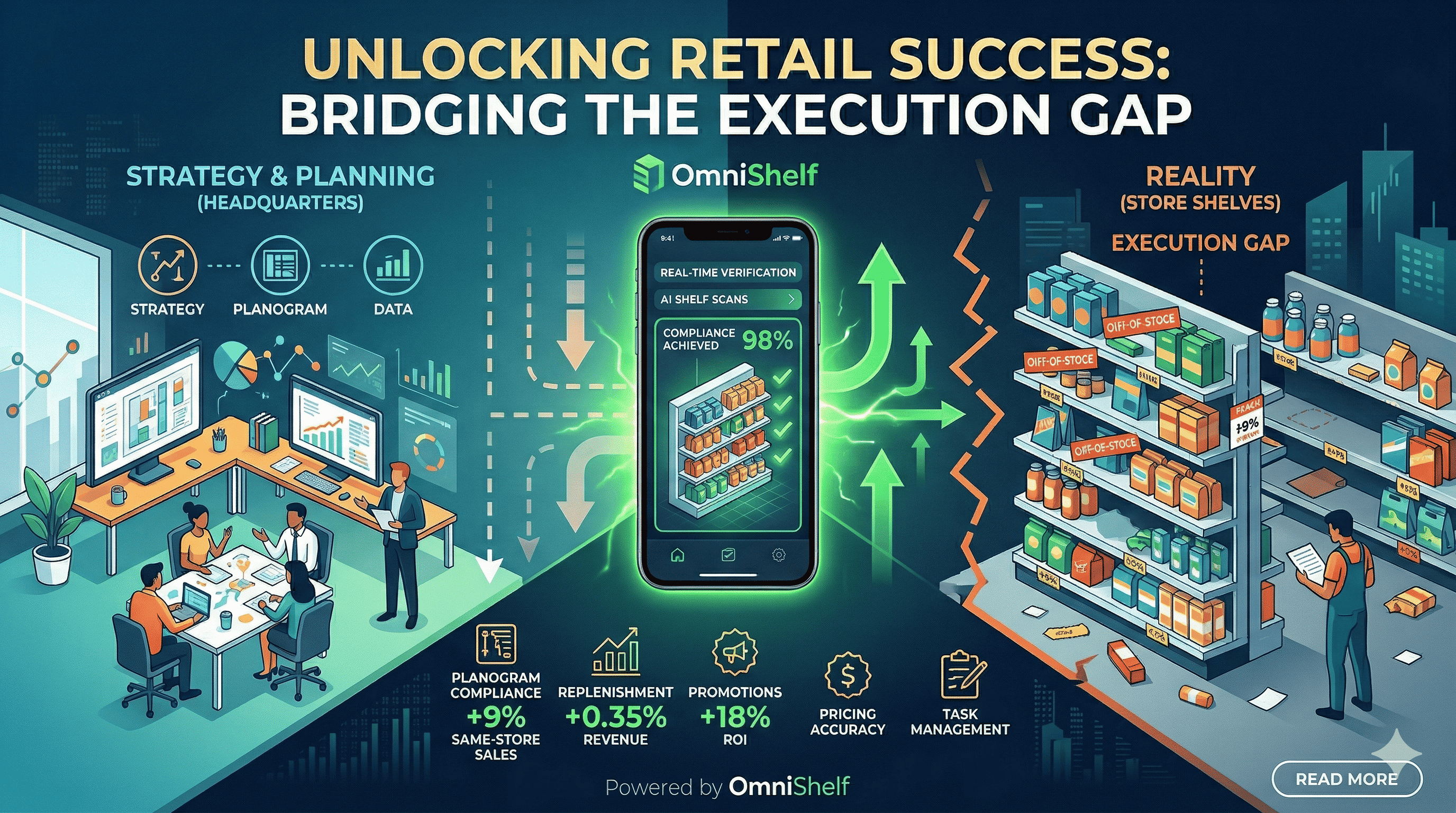
Effective retail execution is the critical link between leadership decisions and the actual customer experience at the store. Despite having sound strategies, many retailers suffer from revenue loss due to inconsistent store operations, such as incorrect shelf placement, inaccurate pricing, and failed promotions. Our CEO Lukasz Piotrowski talks about what makes the execution gap and how to fix it.
Read More
Why AI Agents Will Disrupt Retail Analytics
Reflections from our CTO why Ai agents will change how we look at retail analytics.
Read More
Building Deep Tech Engineering Teams When the Path Is Not Written Yet
In deep tech, linear progress is a myth and breakthroughs don't follow a schedule. This article explores the transition from scientific uncertainty to a scalable system, arguing that shared context and adaptability are the keys to solving impossible problems.
Read More
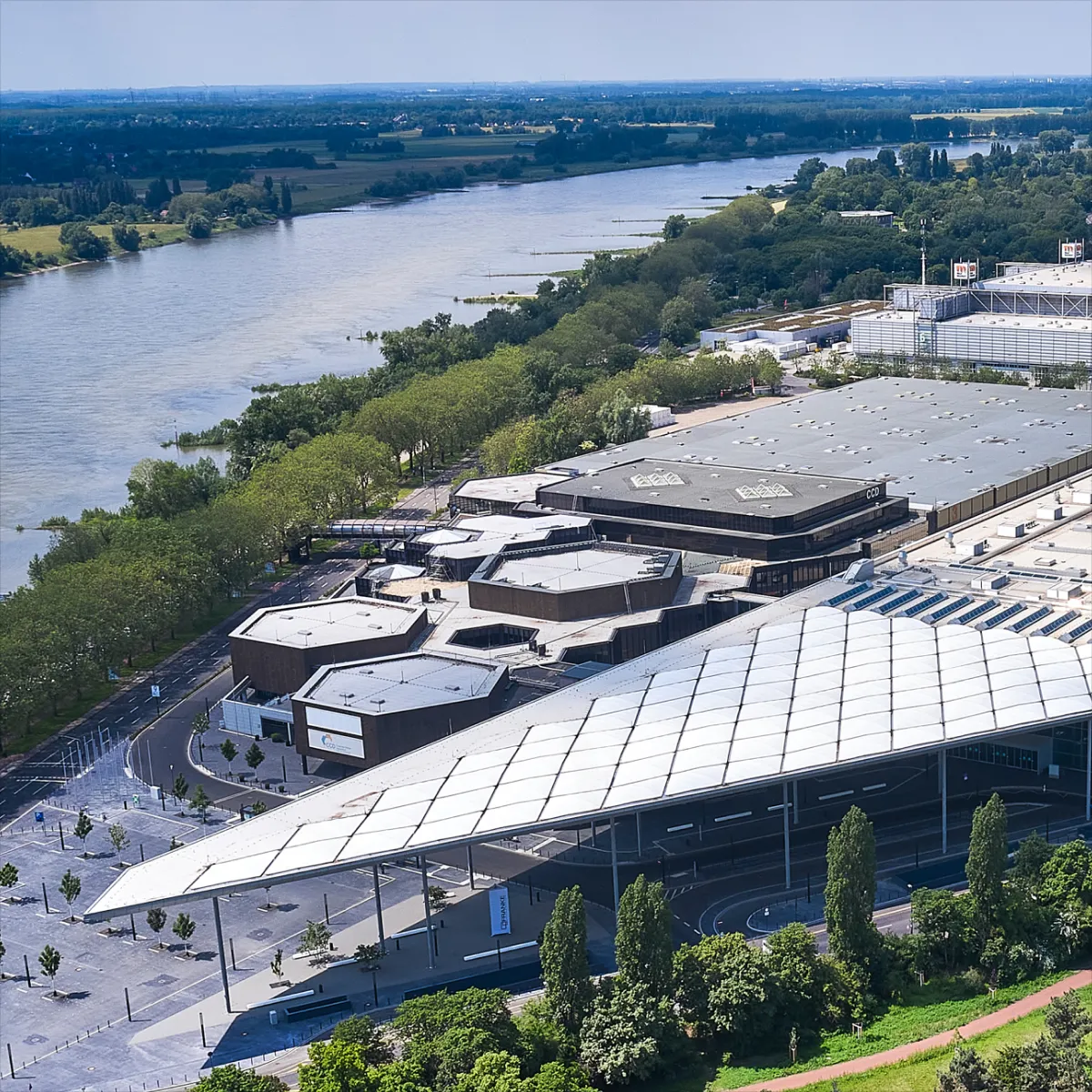
We are heading to EuroShop ( here’s what to expect)
Discover why OmniShelf is attending EuroShop 2026 to tackle real store execution challenges, improve shelf availability, and scale retail operations.
Read More
Lessons From a Decade in AI
Discover how scaling, data, generalisation, and hardware efficiency drive today’s AI systems, and why the future of AI is moving toward on-device performance.
Read More

The OmniShelf Store Operating System: Redefining Retail Execution with Edge AI
Discover how the OmniShelf StoreOS unifies operations, marketing, inventory, and data to eliminate retail blind spots and improve execution across every store.
Read More
The Evolution of Computer Vision And Why the Future Belongs to the Edge
Discover how computer vision evolved from handcrafted algorithms to multimodal AI and why the future of visual intelligence is moving to the edge.
Read More
Elevate 2025 Highlights
OmniShelf joined forces with SOTI at monday.com Elevate 2025 to showcase how AI, automation, and real-time shelf visibility are transforming retail operations. Discover key highlights and insights from the event.
Read More
GS1 Hong Kong Retail Summit 2025 Highlights
From AI-powered supply chains to sustainable business transformation, here’s what industry leaders shared at the GS1 Hong Kong Retail Forum 2025 about building smarter, more resilient retail ecosystems
Read More
How Computer Vision is Revolutionizing Retail
Discover how AI-powered computer vision is revolutionizing retail operations. From preventing theft and managing inventory to enhancing customer experience, see how this technology, powered by edge computing, is reshaping the modern shopping experience.
Read More

Why a Store Operating System is Non-Negotiable for Retail Expansion
Retail expansion brings complexity. Discover how a Store Operating System (SOS) transforms chaos into control with AI-powered execution, real-time insights, and unified operations.
Read More
Why Shoppers Walk Away
Learn why product availability is the foundation of customer experience. See how one “Out of Stock” sign can impact sales, loyalty, and reputation and how retail AI can stop it from happening.
Read More

The Imperfect Shelf Is Destroying Your Stores. Here’s Why.
Every misplaced product, wrong price tag, and empty shelf costs more than you think. Here’s why the imperfect shelf is retail’s hidden trillion-dollar problem.
Read More
NRF Paris 2025 Day 3 Recap: Unified Commerce & AI
Day 3 of NRF Paris 2025 highlighted unified commerce, AI-driven personalization, omnichannel innovation, and the future of customer experience in retail.
Read More
NRF Paris 2025 Day 2 Recap: Ai, data and customer centric strategies
Day 2 of NRF Paris 2025 showcased how retailers are using AI, data, and customer-centric strategies to transform payments, supply chains, loyalty, and in-store experiences. From community sponsorships with Snipes & PSG to MediaMarktSaturn’s omnichannel reinvention, the event highlighted the future of retail with personalization, automation, and next-gen customer engagement.
Read More
NRF Paris 2025 Day 1 Recap: AI, Payments & Omnichannel Innovation
Discover the highlights from Day 1 of NRF Paris 2025 – Retail’s Big Show Europe. From AI-powered retail operations and evolving payment solutions to omnichannel strategies and sustainability, here’s how leaders are shaping the future of retail.
Read More
We Are Attending NRF 2025: Retail’s Big Show Europe
Join OmniShelf at NRF Paris 2025, where innovation meets retail. Join us at Europe's premier event to explore cutting-edge solutions for the future of shopping.
Read More

Are Your Shelves Killing Your Sales?
Learn how poor shelf execution silently kills retail sales and how smarter real time solutions can improve revenue, trust and efficiency.
Read More

Why a Store Operating System is Non-Negotiable for Retail Expansion
Discover why spreadsheets and manual processes can cripple retail expansion. Learn how a Store Operating System (SOS) eliminates out-of-stocks, boosts shelf compliance, prevents staff burnout, and enables data-driven growth for modern retailers.
Read More

From Dock to Display: Closing the C-Store Execution Gap
The mission was clear. A major beverage brand spent millions to launch its new energy drink, meticulously planning every detail down to the cooler placement in thousands of convenience stores nationwide.
Read More

The Invisible Threat to Retail: How Phantom Inventory Haunts Southeast Asia
Discover how phantom inventory silently drains profits in Southeast Asia’s retail sector. Learn the causes, consequences, and strategic solutions to eliminate this invisible threat.
Read More
How AI Can Help You Manage the Store (At Every Level)
Learn how applied AI is transforming retail operations by reducing decision fatigue, preventing stockouts, and improving execution at the store, area manager, and headquarters levels with the OmniShelf Store Operating System.
Read More
The Trillion-Dollar Problem: How Poor Shelf Execution is Costing Retailers Billions
Poor shelf execution is costing retailers billions. This blog explores how out-of-stocks, pricing errors, and misplaced items sabotage sales and erode trust—even when products are in-store. Learn why traditional methods and outdated tech fall short, and how OmniShelf’s AI-powered, real-time shelf operating system helps prevent lost revenue, even without internet access.
Read More
What we learned at Shoptalk Europe 2025
Omnishelf joined retailers and tech leaders at Shoptalk Europe 2025 to explore what’s next for the retail shelf. Here’s our take on the trends that matter.
Read More

Live from Zebra DevCon 2025: Real Retail Problems, Real Solutions
OmniShelf is proud to be here on the ground. We’re showcasing how our real-time shelf intelligence tool helps store teams save time, improve shelf execution, and increase sales without needing extra hardware.
Read More

Meet Us at NRF Singapore 2025
Discover how OmniShelf and Zebra Technologies are transforming shelf management with real-time retail intelligence at NRF Singapore 2025. Visit us for live demos and expert insights.
Read More
