Retail
7-Eleven Philippines: Scaling Shelf Execution Across 4,500+ Stores
How 7-Eleven Philippines moved from periodic audits to continuous shelf scanning across 4,500+ stores, with 1.7× like-for-like sales growth and 35% better planogram compliance.

Reading Time
11 Minutes
Table of Contents
Authored By

OmniShelf Team
Customer Stories
Executive Summary
7-Eleven Philippines runs more than 4,500 stores across an archipelago where demand changes from community to community. Variable planograms (VPOGs) lifted sales by 10–15%, but the gap between the planogram and the physical shelf made them hard to execute at scale. By moving from periodic audits to continuous, scan-based execution with OmniShelf StoreOS, 4,500+ stores now scan their shelves every week, and the platform’s impact is measurable in sales, margin, compliance, and store productivity.
Key results
- 1.7× like-for-like sales growth and 2.3× profit margin growth versus benchmark stores (600 vs. 600 stores)
- 4,500+ stores participating weekly, generating about 800,000 reports a month
- 35% improvement in planogram compliance
- Up to 76 hours saved per store per month on planogram execution and restocking
- Employee NPS of 9.2 out of 10
For a retailer operating more than 4,500 stores across an archipelago as diverse as the Philippines, one assortment strategy rarely works everywhere. Different communities have different needs, different stores face different supply conditions, and even the best planogram is only useful if it can actually be executed on the shelf.
For 7-Eleven Philippines, this created a fundamental operational challenge:
How do you make a highly localized assortment strategy work consistently across thousands of stores?
The answer involved moving from periodic shelf audits to continuous, technology-enabled execution with OmniShelf StoreOS. The result: more than 4,500 stores participating weekly, approximately 800,000 reports generated every month, and measurable improvements in sales, margin, planogram compliance, on-shelf availability, and store productivity.
The Complexity Behind 4,500+ Stores
7-Eleven Philippines operates across a fragmented archipelago, supported by more than 20 distribution centers that supply over 90% of store sales, far more than a contiguous market would require. The geographic and cultural diversity of the market, including multiple dialects, creates highly localized demand patterns and significant operational complexity: what works in one community may not work in another.
The retailer had already developed ways to manage this complexity through talent development, real-time metrics, aligned incentives, and tailored franchising models across more than half of its stores. Technology was another important part of the operating model, used to overcome real-time and space constraints in meeting more customer needs. Its cash-in platform processes 5X its retail sales in peso volume, deposited in recycler ATMs for real-time credit (the largest such network in the Philippines). In dense areas, mini-commissaries serve up to 40 stores by motorcycle delivery, with fried chicken cooked less than half an hour earlier.
Even so, assortment planning and execution remained the most persistent challenge. Tailoring range to a diverse demographic landscape matters: Muslim shoppers don’t buy pork rinds, and lower-income shoppers don’t buy premium bottled water. The retailer knew Omnistream’s variable planograms (VPOGs) could solve this, and they delivered a 10–15% sales uplift. But the execution was harder.
When the Planogram Meets the Real Shelf
The problem was not knowing what should be on the shelf. It was knowing what was actually there.
Highly localized demand was only one part of the challenge. Constant supply chain issues made VPOGs too complex to scale easily: inbound supplier fill rates to distribution centers averaged around 80%, while small-format stores also faced familiar execution issues such as single facings and backroom replenishment. As a result, the ideal assortment represented by a VPOG could differ significantly from the physical shelf, and the retailer could not identify those gaps well enough to create proper feedback loops for Omnistream to calibrate and adjust its VPOGs.
Before OmniShelf, identifying those gaps depended on Excel-based workflows, manual checks, delayed audits, and third-party compliance services. The information existed, but it arrived too slowly and incompletely to create an effective feedback loop. With limited visibility into actual shelf conditions across 4,500+ stores, and the high cost and delay of manual compliance, the lag directly affected sales. VPOGs increased both the opportunity and the complexity: they improved performance, but widened the gap between what should be on the shelf and what actually was, putting strain on store operations.
The opportunity was therefore bigger than automating audits. It was to digitize execution at the store level, eliminate manual reporting, and enable immediate correction of issues, creating a direct connection between the planogram, the shelf, and the store team responsible for execution. The goal was not just efficiency, but making a more complex merchandising strategy operationally viable at scale.
Turning Shelf Conditions Into Action
7-Eleven Philippines developed the solution in close collaboration with OmniShelf and its internal Operations and IT teams, and it was OmniShelf’s first customer, just as it was Omnistream’s. The result was OmniShelf StoreOS, an edge AI-enabled shelf intelligence platform designed to automate planogram compliance and on-shelf availability (OSA) while guiding employees toward immediate corrective action.
Using existing handheld devices, store employees scan their shelves and receive near-instant feedback on gaps, including products that are missing, misplaced, or incorrectly stocked, and what needs to be fixed. Rather than producing another report for someone to review later, the system turns shelf data into an actionable workflow. This effectively puts a “digital auditor” in every store, enabling real-time execution rather than delayed reporting. The system sits at the intersection of in-store intelligence and workforce enablement, replacing manual processes with a scalable, data-driven workflow that improves availability, compliance, and ultimately sales.
The technology is not just diagnostic but prescriptive, turning data into immediate, actionable tasks for store staff. By simplifying execution, it allows the retailer to sustain more complex, localized assortments without increasing operational burden. It also frees front liners to focus on what people do better than machines: building relationships with other people, especially customers. The retailer’s next big project, for example, involves clerks performing face-to-face ID checks for digital lenders.
Designed for the Reality of the Philippines
One of the key decisions in the implementation was to use on-device, or edge, processing. Connectivity can be unstable across the Philippine market, and processing on the device allowed StoreOS to function reliably without depending entirely on constant connectivity. It also reduced infrastructure costs and avoided the need for additional hardware investment.
The platform integrates with existing systems, including Azure and device management infrastructure, and supports product and planogram updates within 24–48 hours, including SKU integration. That speed is important for a retailer managing both dynamic and standard assortments across thousands of locations.
The partnership has also evolved beyond implementation. 7-Eleven Philippines and OmniShelf continue to co-develop enhancements based on live operational feedback, and the solution is now being referenced and explored across other 7-Eleven markets, much as Omnistream has been in other formats around the world.
Proving the Model Before Scaling It
The first deployment was deliberately focused. From December 2023 to May 2024, 7-Eleven Philippines ran a Proof of Value across 100 Metro Manila stores, covering four high-impact categories:
- Beer
- Chips
- Soft Drinks
- Cigarettes
The team used existing handheld devices to test real-world image-recognition accuracy and usability, which avoided costly infrastructure upgrades and accelerated deployment. The pilot focused on closing the gap between reported and actual shelf conditions, and it measured both operational effort, including time spent on execution tasks, and commercial impact.
Results were immediate: planogram compliance improved by 35%, and on-shelf availability increased, for example by 9.3% in Beer. These outcomes validated both the technology and the operating model, supporting rapid scale-up.
From 100 Stores to 4,500+
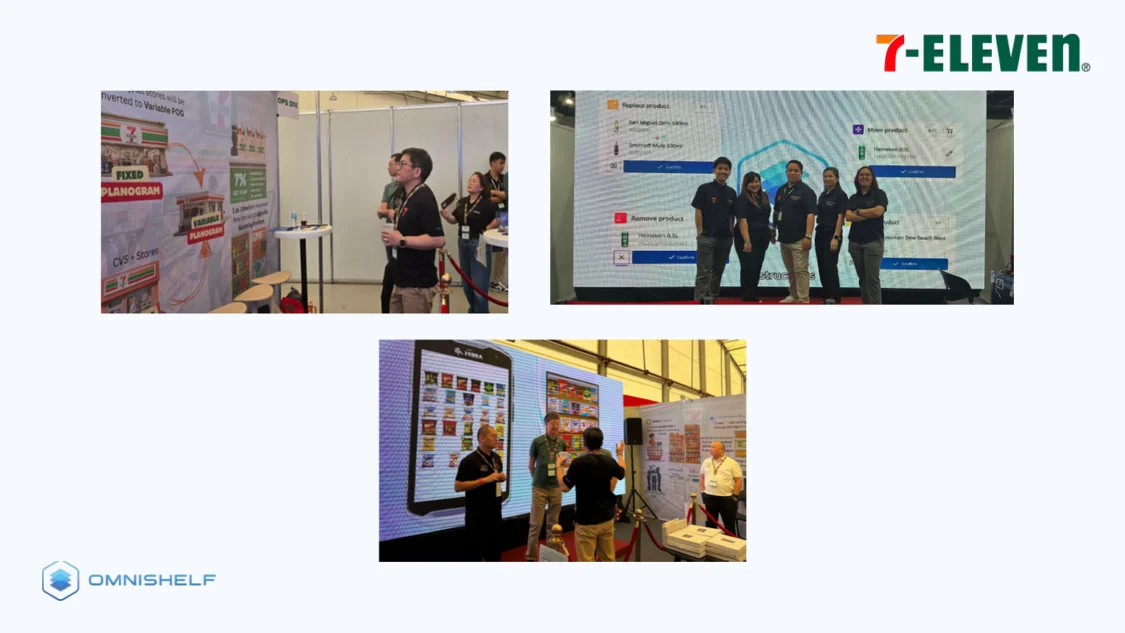
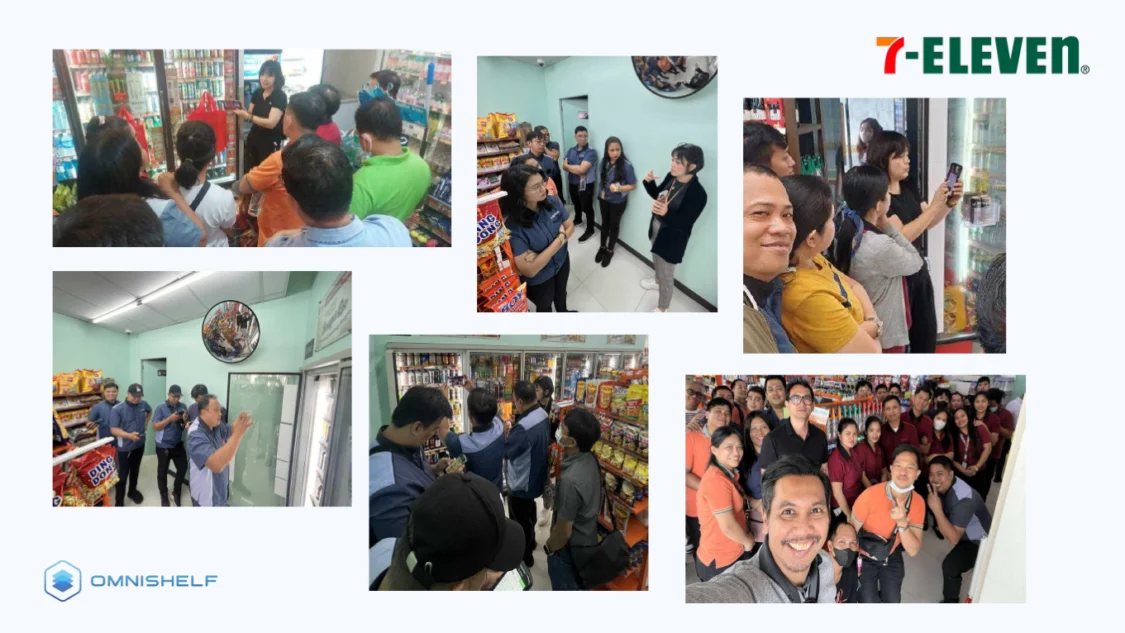
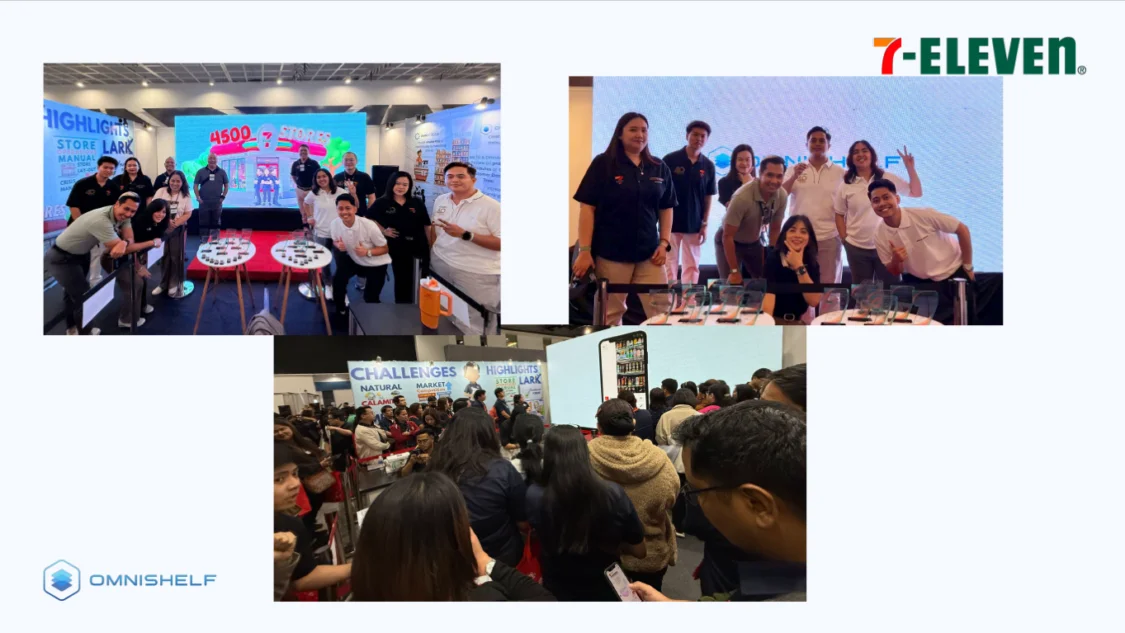
Following the pilot, the solution was rolled out in phases, reaching 4,500+ stores by Q4 2025. Rather than taking a “big bang” approach, stores were onboarded in batches, which allowed the team to continuously learn and adapt while using the retailer’s existing field structure, including zone representatives and district managers. Training was standardized, with real-time support channels such as Viber helping teams resolve issues quickly.
Because the implementation required minimal infrastructure change, deployment across both existing and new stores was significantly easier. The model is now embedded into ongoing operations, with 20–50 new stores onboarded every month, and at scale the platform generates more than 200,000 shelf scans per week, creating near-real-time visibility across the network.
From Reporting Problems to Fixing Them
The biggest operational change was not simply digitizing the audit process. It was changing what happened after a problem was identified.
Store teams now conduct regular scans across key categories covering approximately 85% of assortment. Instead of reporting an issue and waiting for another process to address it, employees are guided to fix it immediately, improving both speed and accuracy. District managers receive regular performance reports, while leaderboards create accountability and engagement at store level. Bonuses are also linked to OSA performance, connecting shelf execution with financial incentives for franchisees and store staff.
This created a new operating loop:
See the shelf → identify the gap → fix it → measure the result.
The process eliminated the need for third-party audit services, reduced operational friction, and improved consistency across stores. The system can also flag inactive locations for proactive intervention, while integration with ordering allows stores to address availability gaps directly. Execution has moved from periodic compliance checks to a continuous operational workflow.
Setbacks and Pivots
Variable planograms had long shown strong potential, but execution challenges at scale created operational resistance. As the rollout expanded, complexity increased and strained store teams. Introducing OmniShelf addressed this, but it required changes beyond technology.
7-Eleven Philippines aligned incentives by linking store bonuses directly to OSA performance, shifting the perception of the platform from a “monitoring tool” to a “performance enabler.” It also moved from a “big bang” rollout to a phased approach, allowing for learning and adaptation. These changes were critical in driving adoption and embedding the system into daily operations, ultimately enabling a broader shift toward more disciplined and consistent execution.
What Changed for the Business?
The impact was measured across financial performance, operational scale, compliance, cost efficiency, and employee engagement.
1. Sales and Profitability
During the rollout phase, 7-Eleven Philippines compared 600 stores using OmniShelf against a benchmark of 600 stores that had not yet been implemented. The OmniShelf stores showed:
- 1.7× like-for-like sales growth
- 2.3× profit margin growth
versus the benchmark stores.
2. Network-Wide Adoption
The solution now reaches approximately 4,500 stores participating weekly, generating around 800,000 reports every month. This matters because shelf intelligence only creates meaningful business value when it works consistently across a large store network.
3. Better Shelf Execution
Early data showed:
- 35% improvement in planogram compliance
- 3% increase in OSA for Beer
- 6.8% increase in OSA for Soft Drinks
The 9.3% Beer improvement cited earlier comes from the Proof of Value, while the 3% and 6.8% figures come from the retailer’s early data for key categories.
4. Less Manual Work
7-Eleven Philippines successfully eliminated external auditor services and shifted that budget toward internal technology enablement. The retailer estimates that the solution saves up to 76 hours per store per month in time dedicated to planogram execution and restocking.
5. Store Team Adoption
Technology adoption ultimately depends on the people using it. Feedback from store employees has been highly positive, with an NPS of 9.2 out of 10. During the pilot, one employee described the solution as “20 out of 10,” citing that the app made shelf-fixing “fast and compliant.”
6. Aligning Execution With Incentives
By tying bonuses to OSA, 7-Eleven Philippines created a direct link between operational discipline and financial reward for its franchisees and staff.
7. Creating New Value From Shelf Data
Shelf data is also being used beyond store operations. The OmniShelf app now provides the PSC Brands Portal with data three times per week, replacing the previous manual weekly collection by field marketers. This eliminated weekly OSA auditor visits while giving brand stakeholders more frequent access to shelf execution data, resulting in significant cost savings.
What’s Next: From Reactive to Proactive Execution
The platform is now deployed across 4,500+ stores and designed for continuous expansion. Near-term enhancements include:
- Probability-based cycle counting to integrate stock-on-hand data
- Price and promotion compliance tracking
- Automated replenishment triggers based on shelf gaps
- Closer integration with dynamic planogram systems
Longer term, 7-Eleven Philippines is piloting shelf cameras and electronic shelf labels, expanding the ecosystem to further automate execution. The direction is a shift from reactive execution to proactive execution, toward a fully automated “perfect store” model.
A Different Way to Think About Shelf Execution
The 7-Eleven Philippines case demonstrates that the challenge of modern retail execution is not simply creating the right planogram. It is making that planogram work in the physical world.
Variable planograms gave 7-Eleven Philippines the ability to respond to highly localized demand, and OmniShelf helped close the operational gap between that strategy and what actually happened on the shelf. The journey started with 100 stores and scaled to more than 4,500, moving shelf execution from delayed audits and manual reporting toward a continuous workflow built around visibility, action, and accountability.
The result is not simply better shelf data. It is a more scalable way to execute a complex merchandising strategy across thousands of physical stores.
Based on 7-Eleven Philippines’ entry in Global Convenience’s “Smartest Store in the World” 2026.
INSIGHTS & UPDATES
Explore More from the OmniShelf Blog
Stay ahead of the curve with deeper insights, product updates, and industry trends shaping the future of retail technology. Discover more stories that matter to your business.
Phantom Inventory: More Than an Inventory Problem
Why phantom inventory keeps hurting retailers even after "fixing" the numbers, and the 3-step fix that stops bad data from spreading across teams.
Read More
The Last Analog Frontier: Why Shelf Visibility Is Retail's Biggest Blind Spot
Retail has digitized almost everything, except the shelf. Discover why closing the retail execution gap is becoming one of the industry's biggest competitive advantages
Read More
OmniShelf Named Digital Shelf Analytics Solution of the Year at the 2026 RetailTech Breakthrough Awards
OmniShelf Store Operating System has been named the 2026 Digital Shelf Analytics Solution of the Year by RetailTech Breakthrough, recognizing innovation in retail execution, shelf visibility, and store operations.
Read More

The Next Phase of Digital Twins in Retail
Explore how digital twins are becoming production-ready in retail through accurate store data, edge AI, and actionable operational workflows.
Read More
5 Reasons Planogram Compliance Fails in Retail Stores (And How to Fix It)
Planogram compliance often drops the moment a shelf is restocked. Discover why manual audits fail and how AI-powered computer vision turns "the last yard" into a competitive advantage.
Read More
What Actually Happens When You Put AI Inside an Engineering Team
AI coding tools are transforming software engineering, but not always for the better. Our CTO explores how AI is reshaping developer roles, creating new risks for junior engineers, and shifting the real bottleneck from writing code to thinking.
Read More
Why ESLs Are Not Enough To Close The Margin Gap
Retailers lose billions due to pricing errors even with electronic shelf labels. Discover why execution gaps persist and how to ensure accurate, real-time pricing across every store.
Read More
Why No Strategy Will Fix The Execution Failure
Effective retail execution is the critical link between leadership decisions and the actual customer experience at the store. Despite having sound strategies, many retailers suffer from revenue loss due to inconsistent store operations, such as incorrect shelf placement, inaccurate pricing, and failed promotions. Our CEO Lukasz Piotrowski talks about what makes the execution gap and how to fix it.
Read More
Why AI Agents Will Disrupt Retail Analytics
Reflections from our CTO why Ai agents will change how we look at retail analytics.
Read More

Building Deep Tech Engineering Teams When the Path Is Not Written Yet
In deep tech, linear progress is a myth and breakthroughs don't follow a schedule. This article explores the transition from scientific uncertainty to a scalable system, arguing that shared context and adaptability are the keys to solving impossible problems.
Read More
We are heading to EuroShop ( here’s what to expect)
Discover why OmniShelf is attending EuroShop 2026 to tackle real store execution challenges, improve shelf availability, and scale retail operations.
Read More
Lessons From a Decade in AI
Discover how scaling, data, generalisation, and hardware efficiency drive today’s AI systems, and why the future of AI is moving toward on-device performance.
Read More
The OmniShelf Store Operating System: Redefining Retail Execution with Edge AI
Discover how the OmniShelf StoreOS unifies operations, marketing, inventory, and data to eliminate retail blind spots and improve execution across every store.
Read More
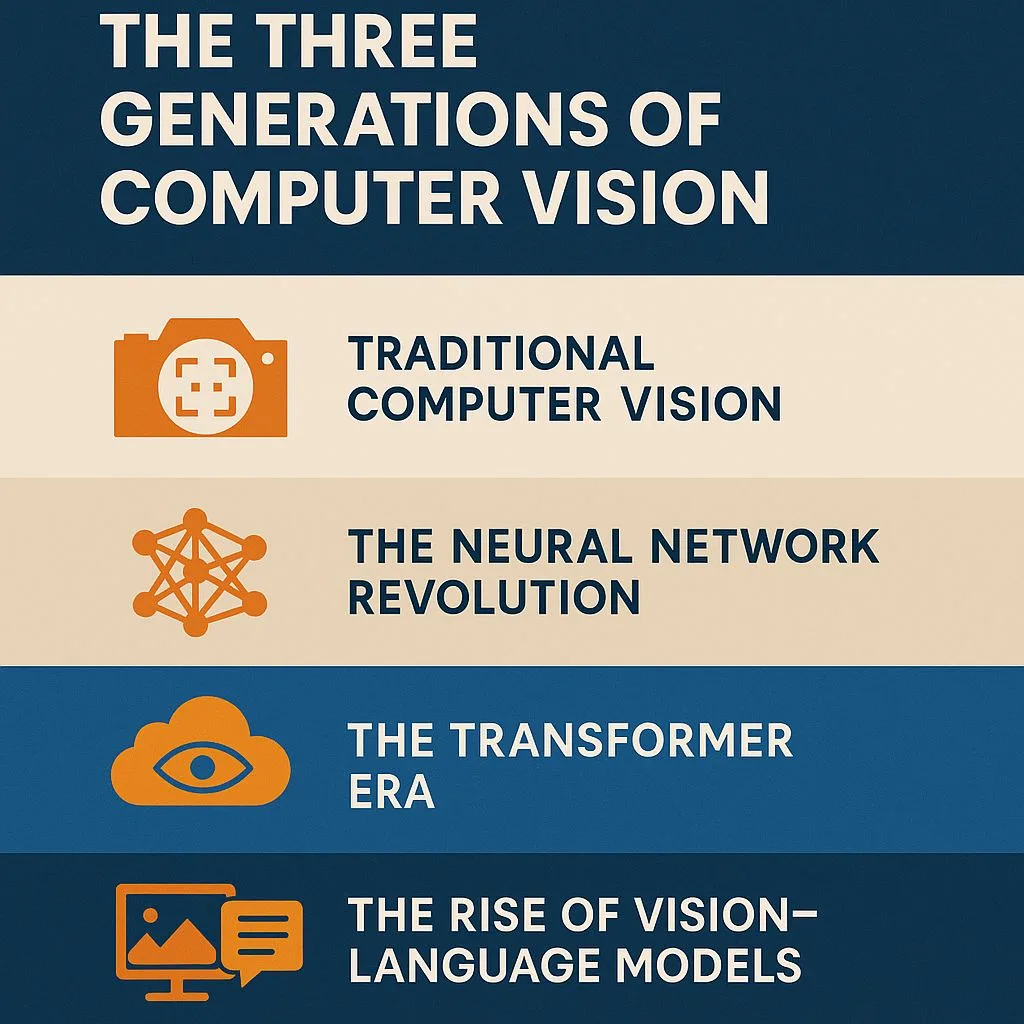
The Evolution of Computer Vision And Why the Future Belongs to the Edge
Discover how computer vision evolved from handcrafted algorithms to multimodal AI and why the future of visual intelligence is moving to the edge.
Read More
Elevate 2025 Highlights
OmniShelf joined forces with SOTI at monday.com Elevate 2025 to showcase how AI, automation, and real-time shelf visibility are transforming retail operations. Discover key highlights and insights from the event.
Read More
GS1 Hong Kong Retail Summit 2025 Highlights
From AI-powered supply chains to sustainable business transformation, here’s what industry leaders shared at the GS1 Hong Kong Retail Forum 2025 about building smarter, more resilient retail ecosystems
Read More
How Computer Vision is Revolutionizing Retail
Discover how AI-powered computer vision is revolutionizing retail operations. From preventing theft and managing inventory to enhancing customer experience, see how this technology, powered by edge computing, is reshaping the modern shopping experience.
Read More
Why a Store Operating System is Non-Negotiable for Retail Expansion
Retail expansion brings complexity. Discover how a Store Operating System (SOS) transforms chaos into control with AI-powered execution, real-time insights, and unified operations.
Read More
NRF Paris 2025 Day 3 Recap: Unified Commerce & AI
Day 3 of NRF Paris 2025 highlighted unified commerce, AI-driven personalization, omnichannel innovation, and the future of customer experience in retail.
Read More
NRF Paris 2025 Day 2 Recap: Ai, data and customer centric strategies
Day 2 of NRF Paris 2025 showcased how retailers are using AI, data, and customer-centric strategies to transform payments, supply chains, loyalty, and in-store experiences. From community sponsorships with Snipes & PSG to MediaMarktSaturn’s omnichannel reinvention, the event highlighted the future of retail with personalization, automation, and next-gen customer engagement.
Read More
NRF Paris 2025 Day 1 Recap: AI, Payments & Omnichannel Innovation
Discover the highlights from Day 1 of NRF Paris 2025 – Retail’s Big Show Europe. From AI-powered retail operations and evolving payment solutions to omnichannel strategies and sustainability, here’s how leaders are shaping the future of retail.
Read More
We Are Attending NRF 2025: Retail’s Big Show Europe
Join OmniShelf at NRF Paris 2025, where innovation meets retail. Join us at Europe's premier event to explore cutting-edge solutions for the future of shopping.
Read More
Are Your Shelves Killing Your Sales?
Learn how poor shelf execution silently kills retail sales and how smarter real time solutions can improve revenue, trust and efficiency.
Read More

From Dock to Display: Closing the C-Store Execution Gap
The mission was clear. A major beverage brand spent millions to launch its new energy drink, meticulously planning every detail down to the cooler placement in thousands of convenience stores nationwide.
Read More
The Invisible Threat to Retail: How Phantom Inventory Haunts Southeast Asia
Discover how phantom inventory silently drains profits in Southeast Asia’s retail sector. Learn the causes, consequences, and strategic solutions to eliminate this invisible threat.
Read More
How AI Can Help You Manage the Store (At Every Level)
Learn how applied AI is transforming retail operations by reducing decision fatigue, preventing stockouts, and improving execution at the store, area manager, and headquarters levels with the OmniShelf Store Operating System.
Read More
The Trillion-Dollar Problem: How Poor Shelf Execution is Costing Retailers Billions
Poor shelf execution is costing retailers billions. This blog explores how out-of-stocks, pricing errors, and misplaced items sabotage sales and erode trust—even when products are in-store. Learn why traditional methods and outdated tech fall short, and how OmniShelf’s AI-powered, real-time shelf operating system helps prevent lost revenue, even without internet access.
Read More
What we learned at Shoptalk Europe 2025
Omnishelf joined retailers and tech leaders at Shoptalk Europe 2025 to explore what’s next for the retail shelf. Here’s our take on the trends that matter.
Read More
Live from Zebra DevCon 2025: Real Retail Problems, Real Solutions
OmniShelf is proud to be here on the ground. We’re showcasing how our real-time shelf intelligence tool helps store teams save time, improve shelf execution, and increase sales without needing extra hardware.
Read More

Meet Us at NRF Singapore 2025
Discover how OmniShelf and Zebra Technologies are transforming shelf management with real-time retail intelligence at NRF Singapore 2025. Visit us for live demos and expert insights.
Read More